
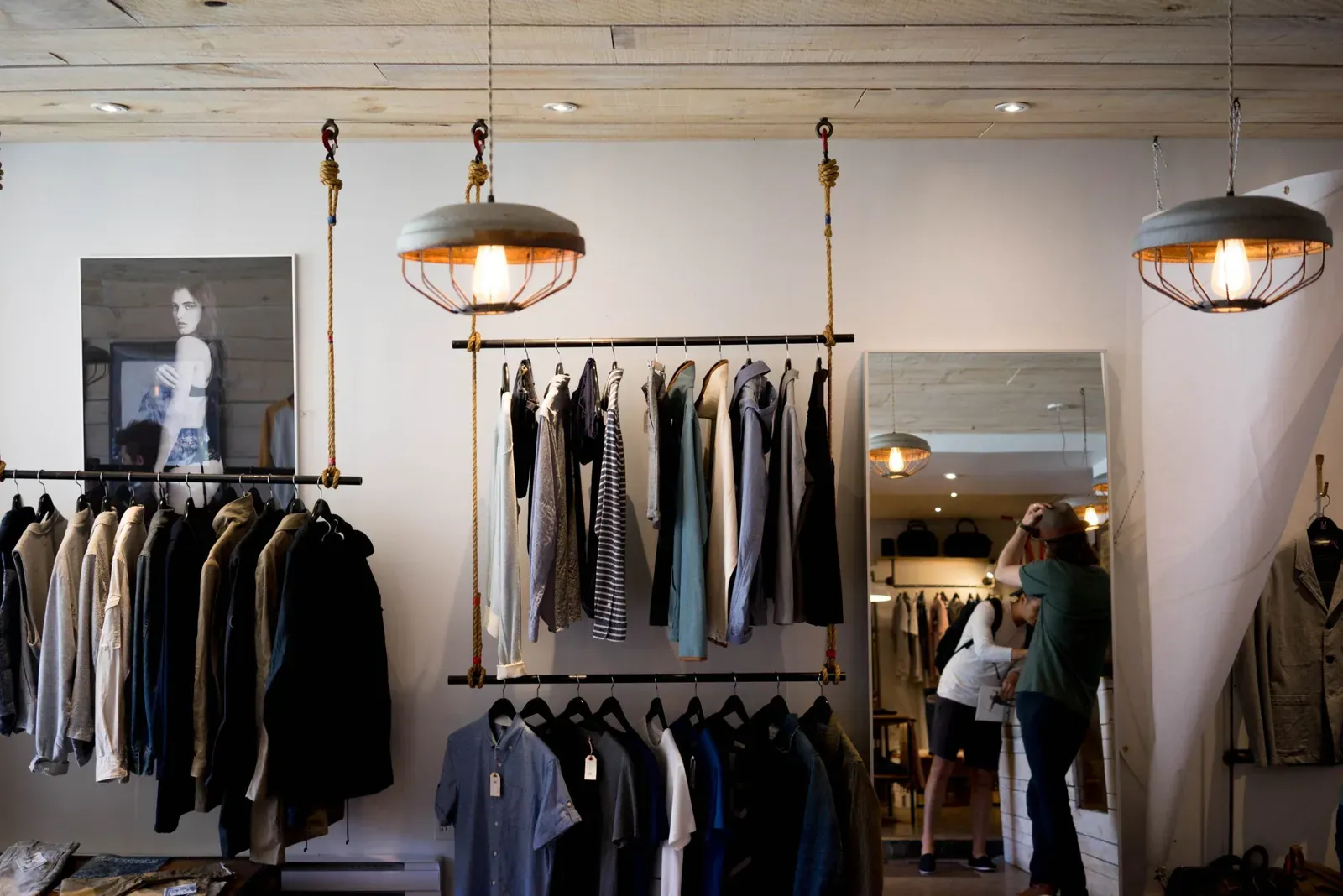
The term merchandising comes from the English word merchandise, meaning goods or wares, and refers to a set of techniques that take place at the point of sale with the purpose of driving product sales.
Sales analysis is an exercise that aims to forecast future sales based on past sales and demand. In this section, we’ll cover the basics of managing the point of sale in a commercial setting.
These are the techniques that take place at the point of sale, and their purpose is to promote the sale of products.
Merchandising can be grouped into four areas:
-
Shelf management: the goal is to optimize shelf performance and space management. To achieve this, different techniques are applied that relate to shelf optimization, product turnover, profitability, and space management.
-
Market research: merchandising bases its decisions on information, and for that reason it studies different aspects such as the type of customer, the target audience, and the competition.
-
Assortment management: techniques designed to select, analyze, and determine which products to display at the point of sale.
-
Point-of-sale activation: these are all the actions dedicated to making the point of sale attractive and dynamic, with the main goal of drawing the consumer’s attention to specific products and driving the purchase. This includes advertising at the point of sale.
As we can see, the techniques above are based on a prior analysis of the point of sale.
Point-of-sale analysis: this is the study carried out on aspects of the store to determine its best structure, the business’s strengths, and its potential weaknesses.
Sales floor
To place a product, you need to know the shelf space and the selling space available and, based on that, optimize the location and the needs of the product in question.
To do this, we should keep the following premise in mind: the sales floor is made up not only of the store’s architecture, but also of the layout of the furniture and fixtures themselves.
The use of the sales floor will therefore be the result of: a good layout and implementation of sections, linear distribution between products, and rigorous control of the selling space.
The selling space is defined as the area dedicated to commercial activities in the strict sense.
Across the sales floor, customers move around, viewing and analyzing the products they will choose.
It’s worth noting that every selling space requires certain formal and functional needs, a commercial and organizational vision from the owner, and a specific product or products aimed at a defined audience.
It should also be pointed out that the selling space is the most expensive and scarce resource any store has. The sales area should take up around 70% to 80% of the total surface area.
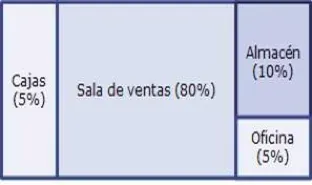
Because of this, it requires organizational solutions inside it, along with the layout and design of distinctive elements.
The shelf is the most important element in merchandising. By shelf, we mean any surface at the point of sale devoted to displaying and presenting products. This concept includes shelving, gondolas, counters, and even the floor, if it’s used as a display area.
The shelf is not a piece of furniture but a measure of the display length of items in the store. That’s why shelf profitability becomes a fundamental objective.
When we allocate the total available shelf space among all the products it should hold, we should have a very clear goal: achieving the greatest profitability through the appropriate turnover of all products.
Assigning shelf length per product is done according to a few criteria:
- The shelf should be representative of reality.
- Assign each product a space proportional to its sales figures.
- Relate the product’s profitability to the shelf space it’s given.
In merchandising, a product from the store’s assortment that sits on the shelf can be influenced by several factors:
– The product, which must sell itself through its packaging.
– The presentation and display of the product so that it attracts and holds the customer’s attention, making it easier to choose and identify the product.
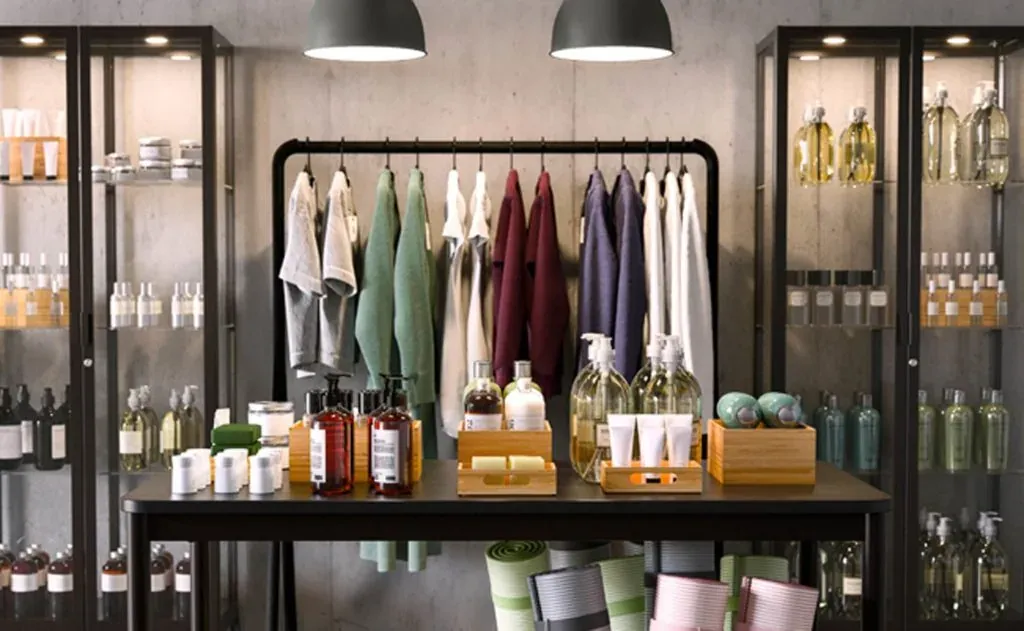
Shelf levels are the physical spaces, such as gondola-type fixtures, intended for displaying the items that make up the store’s assortment.
- Top level: this is the highest of the levels. It’s considered a poor-selling level, since the products are placed out of reach of the customer’s hands.
It can be used as just another shelf despite the accessibility issues. It’s a placement considered to generate few sales, which is why it’s used as storage or reserve for high-sales days.
-
Upper-middle level: this is the eye level and, therefore, the best-selling one. This level showcases the product and holds the customer’s attention. It sparks the desire to reach for it.
-
Lower-middle level: this is the level located in the center of the gondola, offering up the product. It’s at a height that lets the customer grab the product by stretching their arm out a little.
-
Bottom level: after the top level, this is the least accessible one. This level is considered to have zero perception and requires effort from the shopper to see and pick up the product.