

If you’re new to this world and your goal is to build a website or an eCommerce store, you’ve come to the right place. We’ll walk you through how to do it and how to get the cheapest technical services for your site.
The first 3 steps to build a website are: choosing a CMS, a domain name, and a hosting provider for your web hosting.
Here’s what this blog will cover:
- CMS (Content Management System)
- Domains
- Hosting
1. CMS (Content Management System)
CMS, or Content Management System
To build a website, you have to decide between using a Content Management System or a static site.
A CMS is a system that lets you build a website without having to learn how to code; you can update the content and make changes easily.
Static pages, on the other hand, you have to code yourself using different languages, so if you’re not a developer it’s easier to go with a CMS.
We can distinguish between:
1 – Proprietary:
- Robust solutions
- A wide range of features.
- Highly effective technical support.
- Very high cost.
- Vendor dependency.
Who is it for? Companies with high eCommerce revenue that can’t afford any failures
Some examples are: Adobe Experience Manager, Kentico, Sitecore
2 – Open:
- Experts adapt it to the company’s needs.
- Free basic versions and more customizable paid versions.
- Open Source technology, open code that can be modified.
- Low or moderate cost.
- Quick to launch with plenty of features.
- Adaptation and customization to the company’s processes.
- Technical support backed by a large global community.
Who is it for? Almost every company
Main open CMS web development platforms
WooCommerce (WordPress)

- For small projects
- Shared server
- High customization
- SEO friendly
- Simple
- Not scalable, no multi-store
- Many features are paid
- Few products
Magento
- Stable platform
- A variety of modules: multi-store, responsive, scalable
- All payment methods
- Complex admin panel: requires a powerful server
- High costs
PrestaShop

- A robust, high-quality, and free solution.
- A good solution for medium-sized projects
- Many languages, multi-store, and flexible
- SEO friendly and responsive
- A very active community
- All payment methods
- Paid custom template
- Complex design
- Doesn’t allow canonical redirection
Shopify

- All payment methods
- Easy and fast to use
- Tax system
- Marketplace of professional templates
- Automatic notifications
- Unlimited products
- No crashes under traffic
- Easy to run
2. Do you need to choose your domain name?
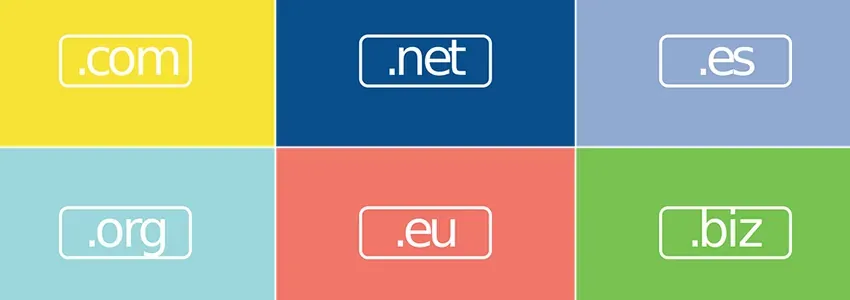
First of all, the domain is the name of your website; it should be an appealing name that attracts your audience. One that conveys what it’s about and can become a brand.
Here are the steps:
- Do some research on different names in your sector, find out which keywords your audience uses, and pick a short, easy-to-remember name. It’s important to avoid numbers or other characters.
- Find a domain checker where you can buy it and see whether it’s already taken. It should be a registrar accredited by ICANN (the Internet Corporation for Assigned Names and Numbers).
- Domain search based on the name you entered. It will show you a list of options with different variations or extensions; it’s highly recommended to go with the .com.
- Choose the domain that fits best; the price ranges between €0.95 and €100.
- Buy the domain, filling in the required fields. If you ever want to change the domain’s ownership details, you’ll always be able to.
- Finally, you’ll need to verify ownership of the website.
3. The different hosting options to choose from read here
StockAgile has these 4 Content Management Systems integrated into its software, since they’re very functional for eCommerce stores in the retail sector without needing to program or use code.
If you run a retail business and use one of these systems, it’s important to know that StockAgile can adapt to your eCommerce according to your needs; it was recently integrated with Zalando.