
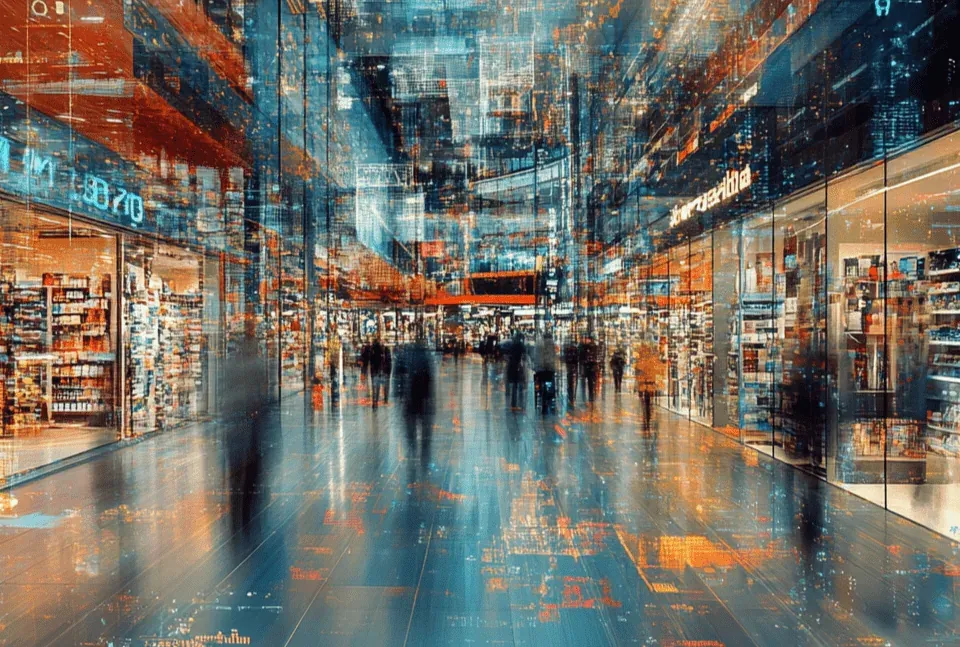
In the digital age, Big Data has emerged as a fundamental tool for transforming the retail sector. With a massive amount of data generated every day, Big Data becomes an essential resource that allows retailers to optimize their strategies, get to know their customers better, and make more informed decisions. This article explores the role of Big Data in the retail sector, its evolution, impact, benefits, and the future of this technology in retail.
What Is Big Data?
Big Data refers to high-volume, high-complexity data sets that exceed the capabilities of traditional data processing systems. This data is generated constantly through a variety of sources, such as online transactions, social media activity, IoT (Internet of Things) devices, and mobile apps, among others. The importance of Big Data lies not only in the sheer quantity of data, but in the ability to analyze it in real time to identify patterns and trends that can inform decision-making in the retail sector.
The types of data include information about buying habits, demographic and geographic characteristics, and product preferences. With proper management and analysis, Big Data becomes a powerful tool for creating competitive advantages in today’s market.
The Evolution of Big Data in Retail
Big Data in the retail sector began to take shape in the mid-1990s, with February 13, 1995, standing out as an important milestone when the British supermarket Tesco launched its Clubcard loyalty program. This system made it possible to track customers’ purchases and offer personalized promotions, marking the start of Big Data use in retail.
Since then, retail has evolved dramatically, driven by digitalization and the growth of e-commerce. Today, retailers generate and analyze an enormous amount of data from various sources, such as online transactions and IoT devices. This analytical capability enables companies to better understand consumer behavior and make informed decisions.
Big Data is crucial for personalizing the customer experience, optimizing inventory management, improving strategic decision-making, and taking advantage of emerging technologies like Artificial Intelligence (AI) and the Internet of Things (IoT). Its impact on the sector is significant, making it easier to adapt to a highly competitive, constantly changing environment.
The Impact of Big Data in Retail
The impact of Big Data in the retail sector is evident across several areas:
Internet of Things (IoT)
The Internet of Things (IoT) allows connected devices to collect data in real time. In retail, this makes it easier to track inventory, analyze buying preferences, and personalize offers. For example, sensors in brick-and-mortar stores can record customer traffic and analyze the most popular products, providing valuable information for managing stock efficiently.
Artificial Intelligence (AI)
Artificial Intelligence is key to analyzing Big Data in retail. Through Machine Learning (a field of artificial intelligence that enables computers to learn from data and improve their performance on specific tasks without being explicitly programmed to do so), retailers can better understand consumer behavior patterns and adapt their marketing strategies accordingly. In addition, AI helps create personalized recommendations on e-commerce platforms, improving conversion and customer loyalty.
Virtual Reality (VR)
Virtual Reality (VR) in retail offers customers an immersive experience, allowing them to visualize products virtually before buying them. VR generates valuable data about user preferences, which can then be analyzed with Big Data to improve product layout and the overall shopping experience.
Real-Time Data Analysis
Real-time data analysis is essential for making fast, effective decisions. With Big Data, retailers can respond immediately to changes in the market or in consumer behavior, giving them a competitive edge in a highly competitive environment.
The Benefits of Big Data in Retail
1. Improves the customer experience
Thanks to Big Data, retailers can personalize the customer experience based on shoppers’ preferences and past behavior. By analyzing data on buying habits and preferences, retailers can offer products and services that are better aligned with consumer expectations.
2. Better inventory management
Inventory management is one of the biggest challenges in retail. Big Data makes it possible to predict product demand more accurately, thereby avoiding overstock or stockout problems. With better visibility into inventory levels, retailers can optimize their supply chain.
3. More accurate data on consumer behavior
The data generated about consumer behavior offers a detailed view of buying trends. This not only makes it possible to understand which products are most popular, but also to identify consumption patterns that can help retailers adapt their offerings and marketing strategies.
4. Helps optimize pricing strategy
Pricing strategy is crucial in the retail sector, and Big Data provides valuable information for adjusting prices according to demand, competition, and seasonality. This not only maximizes profitability, but also improves customer satisfaction by offering competitive prices.
The Future of Big Data in Retail
The future of Big Data in retail promises to be exciting, with the continued advancement of technologies like Artificial Intelligence, the Internet of Things, and Virtual Reality. As retailers integrate these technologies, Big Data will become an even more central element in delivering personalized experiences and optimizing their operations.
Retail companies are also beginning to explore new predictive analytics models that make it possible to anticipate market changes and adapt their strategies proactively. As data continues to grow, the challenge will be to ensure secure and efficient data storage, since protecting customer privacy will be key to maintaining trust.
In conclusion, Big Data in the retail sector not only improves operational efficiency but also enriches the relationship between retailers and customers. As technology evolves, Big Data will continue to offer new opportunities to innovate and create value in this sector.
To learn more about how Big Data can transform the retail sector, you can explore our retail analytics features.
Additional sources for understanding the impact of Big Data:
• IBM Analytics: The use of big data in the real world
• Big Data: The next frontier for innovation
Frequently Asked Questions
What is Big Data in retail?
Big Data in retail refers to the use of large volumes of data generated by consumer transactions and behaviors to improve decision-making, personalize the customer experience, and optimize inventory management.
How has Big Data evolved in the retail sector?
The use of Big Data in retail began in 1995 with Tesco’s Clubcard loyalty program. Since then, it has evolved with the rise of e-commerce and digitalization, enabling retailers to analyze data in real time and adapt their strategies to consumer needs.
What are the benefits of Big Data for retailers?
The benefits include improving the customer experience through personalization, better inventory management, more accurate data on consumer behavior, and optimized pricing strategy.
What technologies are related to Big Data in retail?
Related technologies include Artificial Intelligence (AI), the Internet of Things (IoT), and Virtual Reality (VR). These tools help analyze data and deliver more personalized, efficient experiences in retail.
How can Big Data improve the customer experience in retail?
Big Data allows retailers to analyze consumers’ buying habits and preferences, enabling them to offer personalized products and promotions, thereby improving customer satisfaction and loyalty.
What is the future of Big Data in the retail sector?
The future of Big Data in retail is promising, with advances in predictive analytics and the integration of new technologies. This will allow retailers to anticipate market changes and adapt their strategies proactively.
How is data collected in retail?
Data in retail is collected through various sources, such as online transactions, social media, IoT devices, loyalty programs, and mobile apps. These sources allow retailers to gain valuable insights into consumer behavior.