
StockAgile is a stock management software. We have spent many years working hand in hand with stores of all kinds, and we wanted to share our know-how with you. Discover the 8 steps to opening a physical store.
1. Study the area and the business
It is essential to know the style we want to adopt and the business idea we want to build around it. We also need to keep several factors in mind:
- The area where we would like to have the premises, and how affluent it is.
- The type of customer we will find. We can set prices more accurately if we are clear about the kind of customer who would shop at our store.
- The competitors that already exist in the area and how we can stand out from them.
2. Find and choose premises
- Floor space: The minimum for a store would be around 50m², and when you calculate the space you need, remember to include the stockrooms or sections that matter to you.
- Lighting: The type of light that enters the store will help when you want to lay it out. Brightness gives a sense of purity and beauty that will enhance the store in every way.
- Age of the premises: If the premises are very old, they are more likely to cause problems down the line. Consult experts before making any purchase — in the end, cheap turns out expensive.
- Shop window: As good sellers, you will know that a large or small window makes all the difference. Being able to display your products to the public draws more customers into the store.
- Location: One of the trickiest parts, if you are not sure, is deciding on the area. The aspects to weigh when choosing your premises are: how affluent the area is (potential customers and the price they are willing to pay), the cost of the premises, the type of product we will sell and whether there is a real need for it, and finally the competitors in the area.
- If we already have these points clear beforehand, we will save ourselves a lot of work when looking for premises, because we will have a clear vision of what we are after.
3. Store design and interior
If you are not clear on the layout, it would be ideal to contact a designer. At StockAgile we want to offer you a few tips.
- Create a welcoming entrance, and bear in mind that the first thing people see will go unnoticed. What is important — and difficult — is knowing how to convey the core idea of the business at that moment. Like everyone, we tend to judge and form impressions, so the entrance must be very pleasant so the customer walks in with a good impression of the store.
- Head right. People tend to turn right when they enter a store.
- There are many ways to organise a store, but what works is creating a path within it that guides the customer. Many stores use a circular route.
- Create spots where they stop and take a break from the route — such as a product grouping, a sign, and so on.
- Trial and error. Once you have your strategy in place, you will see how your business evolves. This process matters, so you can spot where you could improve and sell more.
With StockAgile, we offer analytics and reports precisely because we know how hard it is for stores to stick to a budget and place exactly the right orders with suppliers. You will be able to see which categories and products have sold the most, and draw your own conclusions about whether you are selling a lot because of where items sit in the store, or the opposite — and keep experimenting until you find the perfect formula.
Click here for more information.
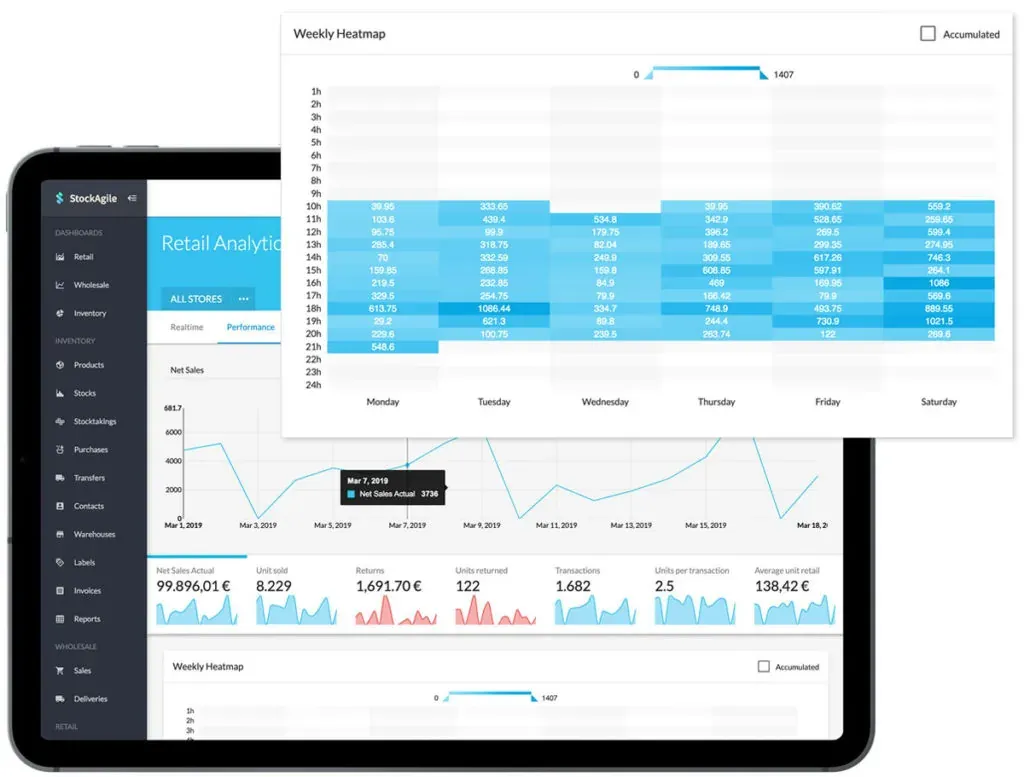
StockAgile analytics screen where you can see the hours when you sell the most and the analysis of each product.
4. Get informed and handle the legal side
Register your commercial activity and get properly informed before you start, so everything is tied up.
5. Buy decorative materials and hardware for the store
Once we have the design clear, it is time to buy the decorative materials for the store. We recommend drawing up a budget and sticking to it. Shelving and low units are a must, as is a table to place the POS on.
Deciding which hardware we want to use is important. At StockAgile, we encourage you to try the POS.
Our software is easy and intuitive. It saves a lot of time on management and more and more companies are adopting it. It automates processes, brings all your management into a single platform, and has many features designed to ease the day-to-day problems stores face.
For more information on StockAgile, one of the best POS systems on the market.
You can see the pros and cons of a POS in this post.
6. Find salespeople for the store
We have almost everything up and running; now we just need the salespeople for the store. How many salespeople do you need? How much are you willing to pay them? How do you want to organise the shifts?
These are questions that will come up and that you have to work through little by little. Before creating a job ad on the various platforms out there, it would be important to have the answers to these questions in mind so you know what you are looking for.
7. The product and the suppliers
We assume that by this step you already have the product in mind. Next, we would get in touch with suppliers, whether from different countries or the same one. We can also consider travelling abroad to look for exclusive products or ideas we might not have thought of.
8. Create an online store
This step is optional. But at StockAgile we believe that having an online presence is almost a requirement these days. More and more people are shopping online, and although it may seem costly, there are plenty of companies and resources for building a website.
StockAgile has an e-commerce module that syncs and automates in real time the stock you sell from your online store and your physical store. You can handle orders and purchases from a single platform.
Find out more.