

In the competitive world of e-commerce, supply chain management is essential to ensure that products reach customers efficiently and on time. This process spans everything from supplier management to final delivery, including inventory control, storage and transport. In this article, we’ll explore how effective supply chain management can benefit your e-commerce business and improve your customers’ shopping experience.
What is supply chain management?
Supply chain management refers to the coordination of all the activities needed to produce, store and distribute products. In the context of e-commerce, this means making sure products are delivered quickly, efficiently and in perfect condition to consumers, meeting their high expectations.
The impact of supply chain management on e-commerce
In today’s retail sector, the demands placed on retailers are intense. Consumers expect not only quality products, but also fast, hassle-free delivery. Supply chain management in e-commerce is crucial to meet these demands and avoid the problems that can lead to a poor shopping experience, such as delivery delays or order errors.
Key benefits:
- Operational efficiency: Effective management optimizes delivery times and reduces operating costs, which is essential to staying competitive in the market.
- Customer satisfaction: Delivering products on time and in good condition increases customer satisfaction and strengthens brand loyalty.
- Competitiveness: A well-managed supply chain allows companies to offer fast, reliable delivery, which is key to standing out from the competition.
Current challenges
E-commerce has transformed consumer expectations. Today, speed and efficiency in deliveries are fundamental factors that can influence the buying decision. Consumers expect delivery times similar to those offered by giants like Amazon, but they aren’t willing to pay more for it. This puts retailers at a crossroads: they must decide whether to absorb the extra costs of fast delivery or risk losing customers.
On top of that, the complexity of supply chain management has increased due to the rise of omnichannel commerce. Consumers want the same shopping experience both online and in physical stores, which forces retailers to integrate their sales channels and optimize logistics to meet these expectations.

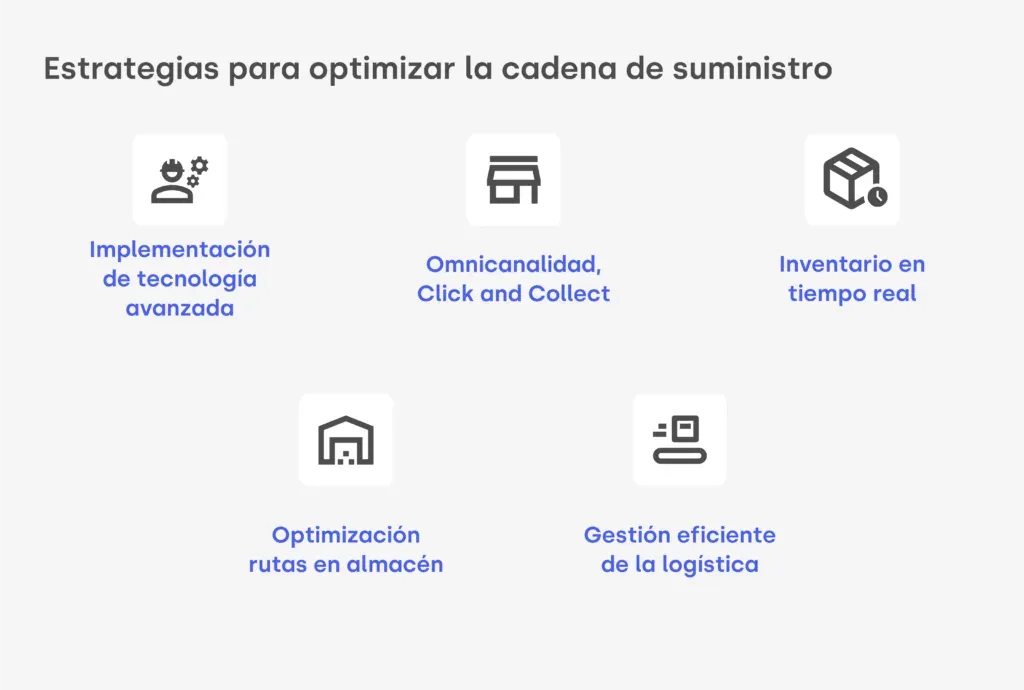
Strategies to optimize the supply chain
- Implementing advanced technology: Using supply chain management (SCM) systems and automation software is vital to improve visibility and control over the entire logistics chain, from inventory planning to transport route optimization.
- Omnichannel: Integrating online and offline channels makes it possible to offer flexible delivery options, such as the Click & Collect or in-store pickup model, which not only reduces waiting times but also lowers shipping costs and drives traffic to physical stores.
- Real-time inventory management: Having a system that updates inventory in real time is crucial to avoid stockouts and guarantee product availability when customers need it.
- Warehouse route optimization: Planning efficient routes to minimize picking times, ensuring that products arrive correctly, on time and in optimal condition.
- Efficient logistics management: Working with shipping partners and setting clear return policies, along with an efficient process for handling returned products, is essential to maintaining customer satisfaction and minimizing losses.
Technology solutions
Companies such as IBM, SAP or Stockagile offer advanced solutions that help retailers manage and optimize their supply chain. These tools provide greater visibility and control over every stage of the process, from supplier management to final delivery to the customer.
Frequently asked questions
What is supply chain management in e-commerce and why is it important?
Supply chain management in e-commerce refers to the coordination and optimization of all the activities involved in producing, storing and delivering products sold through online platforms. It’s important because:
Operational efficiency: It optimizes logistics processes, reducing costs and delivery times.
Customer satisfaction: It ensures products arrive on time and in good condition, improving the customer experience.
Competitiveness: It allows companies to stay competitive by responding quickly to market demands and customer expectations.
Inventory control: It helps maintain optimal inventory levels, avoiding overstock and shortages.
What are the main challenges in supply chain management in e-commerce?
The main challenges in supply chain management in e-commerce include:
Fluctuating demand: Variability in customer demand can make it difficult to plan and stock inventory properly.
Logistics and transport: Coordinating transport and logistics for fast, efficient deliveries can be complex, especially at an international level.
Returns management: Handling product returns efficiently and cost-effectively is a constant challenge.
Technology integration: Ensuring that inventory, order and logistics management systems are integrated and work together consistently.
Data security: Protecting customer information and transaction data is crucial to maintaining trust and complying with regulations.
What strategies can improve supply chain management in e-commerce?
To improve supply chain management in e-commerce, consider implementing these strategies:
Process automation: Use software and automation tools to manage inventory, orders and logistics efficiently.
Data analysis: Apply predictive analytics to anticipate demand and optimize inventory levels.
Supplier collaboration: Build strong relationships with suppliers to ensure a steady, quality supply.
Last-mile logistics: Improve last-mile logistics using solutions such as local warehouses and flexible delivery options to reduce delivery times.
Returns management: Implement efficient processes to handle returns, minimizing costs and improving customer satisfaction.