

In the world of retail, one of the key indicators for efficient inventory management is the stock turnover ratio. Understanding this ratio is essential to keep a steady flow of products, minimize storage costs and ensure your business is running with proper planning. A high stock turnover means products sell quickly, which translates into greater operational efficiency and a better use of your financial and labor resources.
What is the stock turnover ratio in retail
The stock turnover ratio, also known as inventory turnover, measures how many times a business sells and replaces its stock over a given period of time. In simple terms, this indicator reflects how fast products move through the sales cycle. A high turnover ratio suggests that stock sells quickly, which is ideal for avoiding stagnant products and the extra costs of storage.
You can dive deeper into stock and inventory management concepts on this page.
How is the stock turnover ratio calculated?
The stock turnover ratio is calculated using a simple mathematical formula.
Formula for the stock turnover ratio:
Stock turnover ratio = Cost of goods sold / Average inventory
- Cost of goods sold (COGS): This value represents the total cost of the products sold during a specific period (for example, a month or a quarter). It includes all the costs associated with those products, such as the cost of acquisition, manufacturing, etc.
- Average inventory: This is the average value of inventory over the same period. It is calculated by adding the inventory at the start of the period and the inventory at the end, and then dividing by 2.
Formula for average inventory:
Average inventory = Beginning inventory + Ending inventory /2
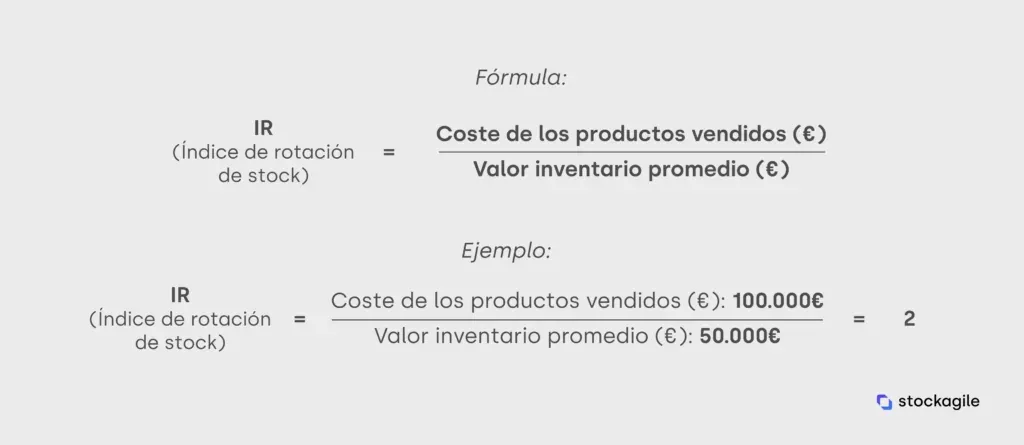
For example:
If, in one quarter, the cost of goods sold is €100,000 and the average inventory is €50,000, the stock turnover would be 2. This means the inventory was renewed twice during that quarter.
It is important to stress that a high turnover ratio is not always synonymous with efficiency. If the ratio is too high, it may indicate a shortage of stock, which can lead to losses from not being able to meet demand. That is why it is crucial to strike the right balance that allows a steady flow of products without overloading the warehouse.
Stockagile helps you control stock turnover
To manage inventory turnover effectively, Stockagile provides an all-in-one solution that makes it easier to plan, organize, direct and control your stock. With this software, you can monitor stock turnover in real time and manage purchasing more efficiently. This will let you reduce costs, improve product flow and keep an optimal inventory level. On top of that, you will be able to identify which products have a high stock turnover and which ones sit longer in the warehouse, helping you make more informed decisions.
In short, knowing and properly managing your stock turnover ratio is vital to ensuring the success and profitability of any retail business. With Stockagile, this process becomes simple and efficient, ensuring your inventory is always aligned with demand and avoiding unnecessary losses.
Frequently asked questions
What is the stock turnover ratio?
The stock turnover ratio is a metric that indicates how many times a business sells and replenishes its inventory over a given period of time. It is key to understanding the efficiency of inventory management and controlling storage costs.
How is the stock turnover ratio calculated?
It is calculated by dividing the cost of goods sold by the average inventory over a given period. The formula is:
Stock turnover ratio = Cost of goods sold / Average inventory.
Why is it important to know your stock turnover ratio?
It is important because it lets you measure the efficiency of your inventory management. A high ratio indicates that products sell quickly, which reduces storage costs, while a low ratio can mean excess stock, which negatively affects profitability.
What is a good stock turnover ratio in retail?
A good stock turnover ratio varies by industry, but generally a higher turnover is preferable, since it suggests products don’t sit in inventory for long. However, a balance must be maintained to avoid stockouts that could hurt sales.
What factors can affect the stock turnover ratio?
Several factors, such as purchasing planning, warehouse management, sales promotions and demand seasons, can influence the turnover ratio. Managing these aspects effectively will help improve inventory flow.
What should I do if my stock turnover ratio is too low?
If your stock turnover ratio is low, it means you have excess products in inventory. In this case, it’s advisable to review your purchasing strategies, run promotions or discounts to move the stock, and optimize your inventory planning to avoid product buildup.
How can Stockagile help improve stock turnover?
Stockagile lets you track inventory turnover in real time and manage product flow efficiently. With its software, you can optimize stock replenishment, reduce storage costs and ensure there are always products available to meet demand.