

Stockouts are one of the main reasons many retail and wholesale businesses fail to grow the way they’d like.
In this article, we’ll walk you through 4 strategies you can adopt so you never run out of inventory, while also keeping overstock from piling up in your warehouse. We’ll also show you what you can do to avoid losing a customer if, for whatever reason, you find yourself in a stockout situation.
1. Forecast your demand to prevent running out of stock
If you run some quick checks on your historical sales data, you’ll be able to spot the moments when you’re most likely to experience a stockout in your store, and to forecast what your demand will be over a given period of time. This lets you get ahead and know, with far greater accuracy, exactly how much stock you should order to keep your customers satisfied during those periods.
The dates when sales tend to spike the most are usually the summer and winter sales, Christmas, and key dates like Black Friday, Valentine’s Day and Mother’s Day. We recommend putting these events on a calendar so you can prepare for them more effectively. Mark not only the high-demand periods, but also the deadlines by which your warehouses should be fully stocked.

2. Know your inventory situation and keep it up to date
Inventory management is, without a doubt, one of the biggest challenges most retailers and wholesalers face, on top of being a real headache (unless you happen to love ticking boxes, organizing your stock and making lists).
You shouldn’t wait until a customer asks for a product you don’t have to realize you need to reorder it. The lack of real-time visibility into inventory status is one of the factors that most affects how poorly many businesses are able to anticipate when they need to restock.
Some ways to keep your stock up to date and avoid running out include recording warehouse inflows and outflows, taking inventory counts, and making adjustments whenever there are returns, theft or other unusual movements. Having this information digitized and training your store staff to be methodical about these processes are two keys to success.
And if, on top of that, you have software that makes all of this easier by automating part of these tasks, you’ll avoid human error and save management time that you can devote, among other things, to selling. Our Stockagile management software does exactly that.
3. Maintain good communication with your suppliers
Suppliers are a very important link in the distribution chain. Sometimes issues come up, such as logistical setbacks and raw material shortages, that cause delivery times to slip and, as a result, leave you without products in your warehouse, creating a sense of dissatisfaction and distrust among your customers. You may also need to restock certain products more quickly due to a sudden increase in their sales.
To prevent stockouts, it’s very important to have good communication with your suppliers. One way to do this is to agree with them on all orders and their delivery times in advance, as well as being prompt on your end when it comes to letting them know about any problem or change that arises. For example, if you see that a product is selling well, instead of waiting until only a few units are left, get ahead and order more to make sure it doesn’t sell out.
You can lean on reminders to help, setting up a notification that alerts you when you’re about to hit the unit threshold you’ve defined yourself. That way it’s much harder to forget to let your suppliers know.
4. Pay attention to consumer trends
Watch how your customers behave and what the market prefers. Is there a product in higher demand? That’s no coincidence. Knowing this information will be very useful when it comes to figuring out which items to focus your attention on and to avoid running out of stock.
To discover the trends of the moment, we recommend staying active on social media. There, you’ll be able to find out what the trending topics are. In other words, the products that are taking off and that your customers will almost certainly want to find in your stores. If your business is in the fashion sector, influencers will help you round out this picture. Want to know which garments are going to be most in demand and should be in your catalog? Pay attention to how they dress, because they’ll undoubtedly become the next trend.

What to do if you have a stockout?
Faced with a stockout situation, some customers will choose to go to another store, but there are ways to save the situation and still close the sale.
1. Offer an omnichannel sales experience
If you sell across several channels, make sure you connect them to improve the buying experience. Turning to omnichannel can be a smart move on those occasions when you don’t have a particular product in one of your points of sale and you want to resolve the situation.
Imagine your customer has fallen in love with a dress and you’re out of stock at the store you’re both in. Explain that they can buy it from that same store online and receive it at their own home within a few days.
If home delivery isn’t a good option for you or your customer, you can also offer them the chance to make the purchase and send them a message when their order arrives at the store. In either of these cases, it’s important to give them a realistic estimate of delivery times. Managing expectations is essential to creating a good buying experience.

2. Turn to substitute products
Substitute products are model products you can offer your customer when the one they’re looking for is out of stock. In a physical store, you can place them in the same spot as the original and, given the resemblance, it will visually seem like you have the same thing.
If, for example, your out-of-stock product is a white shirt, its substitute product would be a similarly styled shirt or a T-shirt in the same color. It’s important that, if you offer a more expensive alternative, you highlight the benefits of your substitute product compared to the one your customer originally came for. With this approach, you offer them a solution that might convince them and encourage them to make the purchase.
3. Keep a safety stock
Safety stock is additional inventory you can fall back on to avoid stockouts. It works as a “wildcard” in case your total inventory runs out, since it’s a minimum reserve you shouldn’t touch and that lets you cover unforeseen events or demand spikes.
This strategy is very useful for high-turnover products and isn’t advisable for those affected by seasonality or tied to specific fads or seasons.
Calculate the stockout rate
The formula for calculating the stockout rate is as follows:
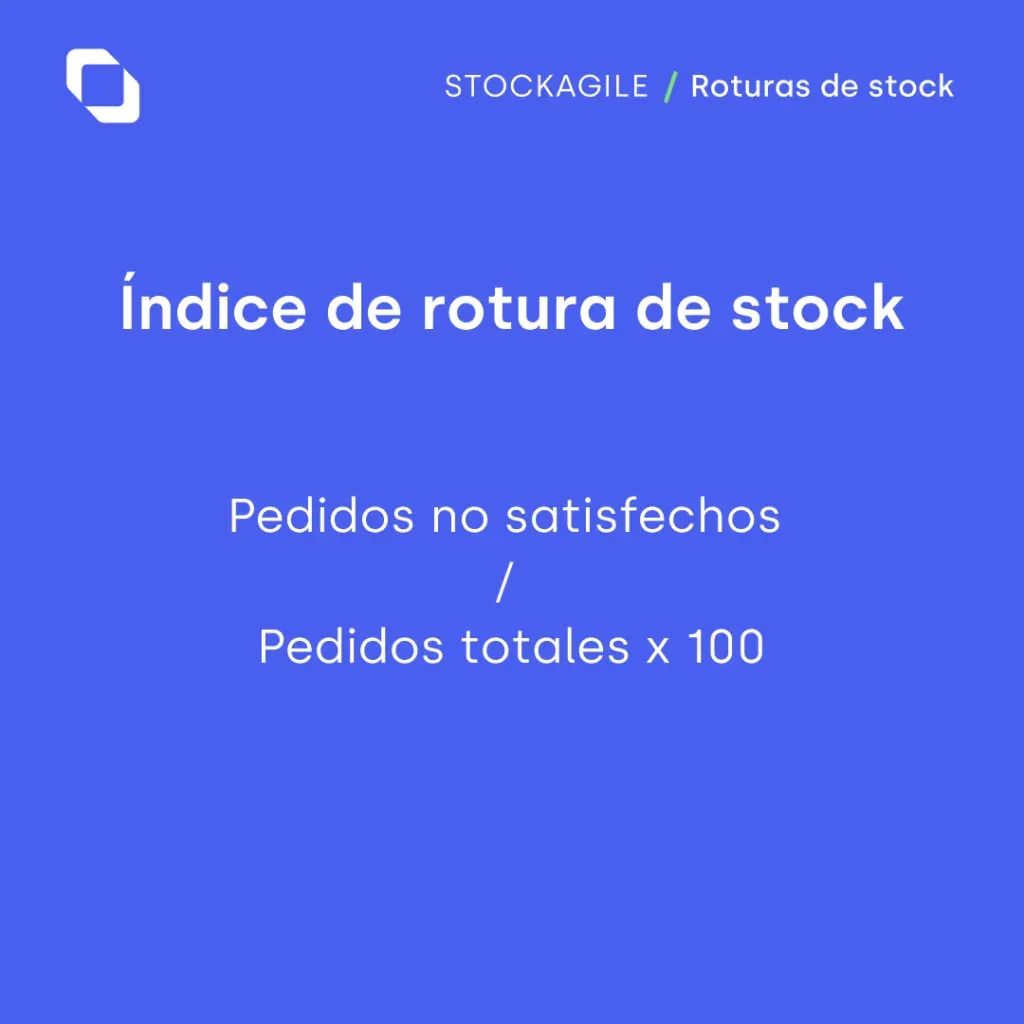
Imagine you’ve had to turn down 30 orders due to stockouts and the total number of orders placed is 120: you’d divide 30 by 120 and multiply by 100 to get a percentage of 25%. That would be your stockout rate.