

Have you ever wondered how you can measure the performance of your physical stores and get better results? If the answer is yes, you’re in luck, because in this article we’re going to walk you through the key KPIs you need to do it, plus how to boost your salespeople’s productivity and increase your sales.
1. The 6 KPIs for measuring your store’s performance
KPI stands for “Key Performance Indicator,” and these are metrics that help measure the success of a company or a specific area of the business. They’re used to make informed decisions based on data. Here are the 6 main KPIs:
-
Number of visits: This indicator is key to understanding the flow of people who pass through your store over a specific period of time. To track it, you need a people counter in your store. With this device, you’ll be able to determine which days of the week or months of the year you receive the most customers, and which times of day see the most activity. This data will let you make strategic decisions that help you attract more customers in the future. There are also people counters that measure the footfall in front of your store, so you can have your complete conversion funnel and know whether you should improve the exterior of your store with window-display techniques.
-
Total sales: You can calculate this by adding up your total sales over a given period of time, whether daily, weekly, monthly, or quarterly. It’s a good idea to segment this data so you can understand it better. We recommend, at the very least, segmenting your sales by date: especially during special campaigns such as Christmas. By salesperson: to understand which employees contribute most to your business’s growth. By product: so you can make better decisions about what your product assortment should be.
-
Average ticket: How much do your customers spend when they make a purchase? Calculate the average ticket by dividing total sales by the number of transactions. For example, if total sales were €8,500 and there were 500 transactions, your customers’ average ticket would be €17.
-
Gross margin: The gross margin KPI is important because it lets you identify which products have higher profit margins and are therefore more profitable. It’s calculated by subtracting the cost of goods sold (COGS) from the selling price and dividing the result by the selling price.
-
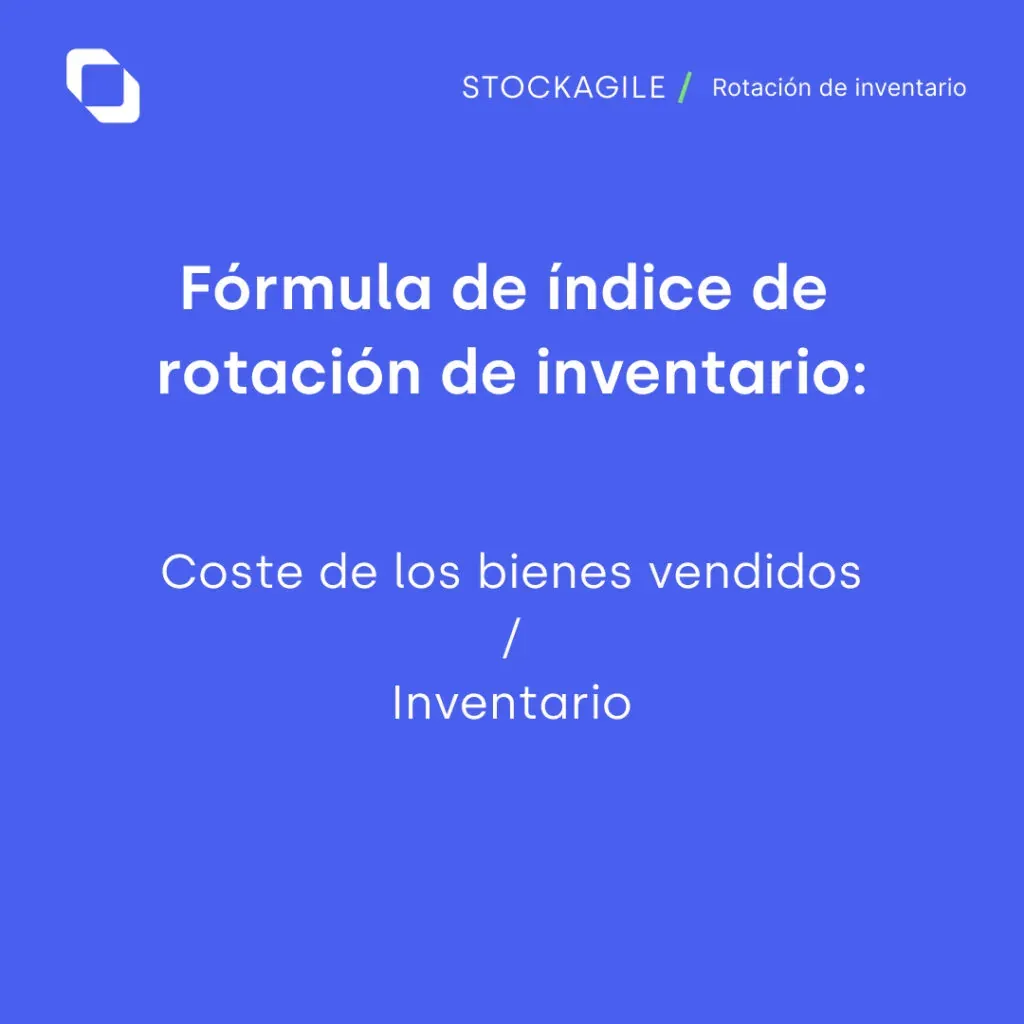
Inventory turnover: Are you selling your products efficiently? Calculate inventory turnover by dividing the cost of goods sold during a given period by the average inventory available over that same period.
- Conversion rate: This KPI measures the percentage of visitors who make a purchase. To calculate it, divide the number of purchases made in a given period by the number of store visits in the same period and multiply by 100. For example, if in one month there were 10,000 store visits and 1,000 purchases were made, the conversion rate would be 10% (1,000 divided by 10,000 and multiplied by 100).
2. Boost your store staff’s productivity with these techniques
Improving your team’s productivity can be quite a challenge. However, there are some techniques and measurement tools that can help you achieve it. With these 6 strategies, you’ll be able to improve your team’s performance and achieve greater success in your stores:
- Offer good working conditions:
It’s important to make sure your employees have good working conditions. It’s not just a matter of responsibility and ethics; it also has a direct impact on your company’s productivity. Give them a good work environment; team-building activities; a salary that meets their expectations; health insurance; flexible hours; vacation days; and a clean, comfortable, and safe workplace, among other things.
- Set clear goals:
For your team to work properly, they need to be very clear about what they should do and how they should do it. Talk to them, keep them informed of any situation or change, and offer them constant training and feedback. You’ll both come out ahead!

- Provide effective tools that make their work easier:
If you want your salespeople to be more productive, they need high-tech tools that help them do their job more effectively. You could implement inventory management software like Stockagile, which lets them optimize their routine tasks and focus on closing sales and building customer loyalty. Stockagile lets your employees know the stock status of your store in real time, saving trips back and forth to the storeroom to check. That optimization lets them focus on sales and on building customer loyalty.
- Train and motivate your team:
You can organize motivational sales workshops. For example, a workshop that teaches them how to sell the store’s products using theater techniques, or a persuasion workshop that teaches them to use sales psychology to increase sales and win over customers. This way, you’ll train your team in a creative way and also improve the relationships between them.
- Make them feel valued:
Teams that feel valued and motivated are more likely to be loyal and perform their work with greater commitment. For example, you could publicly recognize each person’s achievements and thank them for their work. One idea would be to create a recognition wall in the store, showing photos of the salespeople and their achievements, or to host a team dinner in their honor. You can also spark their motivation by creating a sales contest and rewarding the winner with a paid day off, a team dinner, a gift box, or any other original idea you can come up with!
- Provide feedback and follow-up:
Your employees need to know how they’re doing their job. Meet regularly with each of them, review their responsibilities, give them feedback, congratulate them on their achievements, and offer them suggestions for improvement.

3. Measure your employees’ performance with these 4 metrics
After applying the techniques above to boost your team’s productivity, you can measure their performance with these metrics:
-
Sales per hour: This is a simple but effective metric for measuring your salespeople’s productivity. To calculate it, divide total sales made by the number of hours worked. This way, you’ll be able to identify the salespeople who are generating more sales in less time and those who need to improve.
-
Conversion rate: This indicator can be used to gauge how effective your salespeople are at converting potential customers into actual, paying customers. To calculate it, divide the number of sales made by the number of customers served. This way, you’ll be able to identify the salespeople who are closing more sales relative to the number of customers they serve.

-
Average ticket: This measures the average value of the sales made by each salesperson. To calculate it, divide total sales made by the number of transactions completed. This way, you’ll know which salespeople are achieving larger sales and you’ll be able to focus on helping those who need to improve. A good way to do this is by training them in their skills so they can make cross-sells. In other words, if for example a customer buys a wedding dress, they may also need shoes. If they buy food for their pet, it would be a good idea to show them your latest leash models.
-
Customer satisfaction rate: This rate measures how satisfied your customers are with the service they receive from your salespeople. You can measure it through surveys or by asking them directly. If you find that a particular salesperson has a low customer satisfaction rate, you can work with them to improve their customer service approach. That said, you need to be careful with these surveys and with setting targets. You don’t want your employees pressuring customers into leaving a positive review. You want the feedback to be genuine. Our advice is not to tie this metric to any financial reward, but rather to treat it as a supporting metric to improve the customer experience and thereby impact the other metrics indirectly.
Now you know everything you need to start measuring the performance of your physical store and improving your employees’ productivity. Go ahead and implement changes, and you’ll see how they show up in your results!