
For most business owners and freelancers, the main goal is surely to sell as many products and services as possible in order to generate more revenue. Now we’ll show you the importance of good merchandising.
Merchandising is the activity at the point of sale that improves access to goods, along with their availability and visibility, for the potential shopper.
When we talk about improving access, we mean the set of techniques used to give the product an active role through its presentation and placement, generating greater demand and optimizing profitability.
The evolution of merchandising:
Phase 1: The store as a setting to present products in an attractive way.
Phase 2: The store organized around the shopper’s needs**.**
Phase 3: The store as a place where the shopper has experiences and interaction.
Merchandising today must start from the profile of the customer you want to serve, so that the way products are displayed is geared toward creating value and making a differentiated proposal that is preferred over other displays of the same product.
What are the objectives of merchandising?
- Make products more attractive.
- Increase the number and volume of customer purchases.
- Provide an environment that encourages buying.
- Optimize advertising investment with an attractive and selective layout.
- Turn the product into an active element in the sale (self-service, or nearly so).
- Build a strong relationship between the point of sale and the customer, using elements designed for that purpose.
- Increase the turnover rates of priority products.
- Make it easier for regular customers to pick up the products.
- Manage the space allocated to commercial activity.
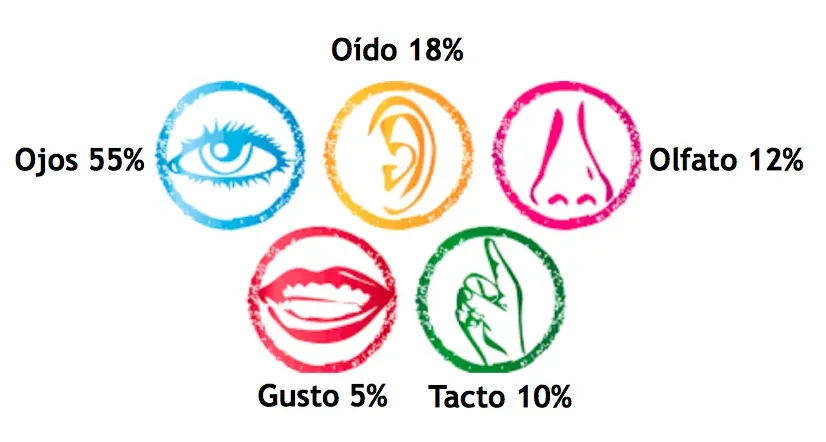
The importance of the senses as a key element for merchandising, and the percentage of impact each stimulus has on the brain:
Merchandising today must start from the profile of the customer you want to serve, so that the way products are displayed is geared toward creating value and making a differentiated proposal that is preferred over other displays of the same product.
Does the exterior of the point of sale affect purchasing?
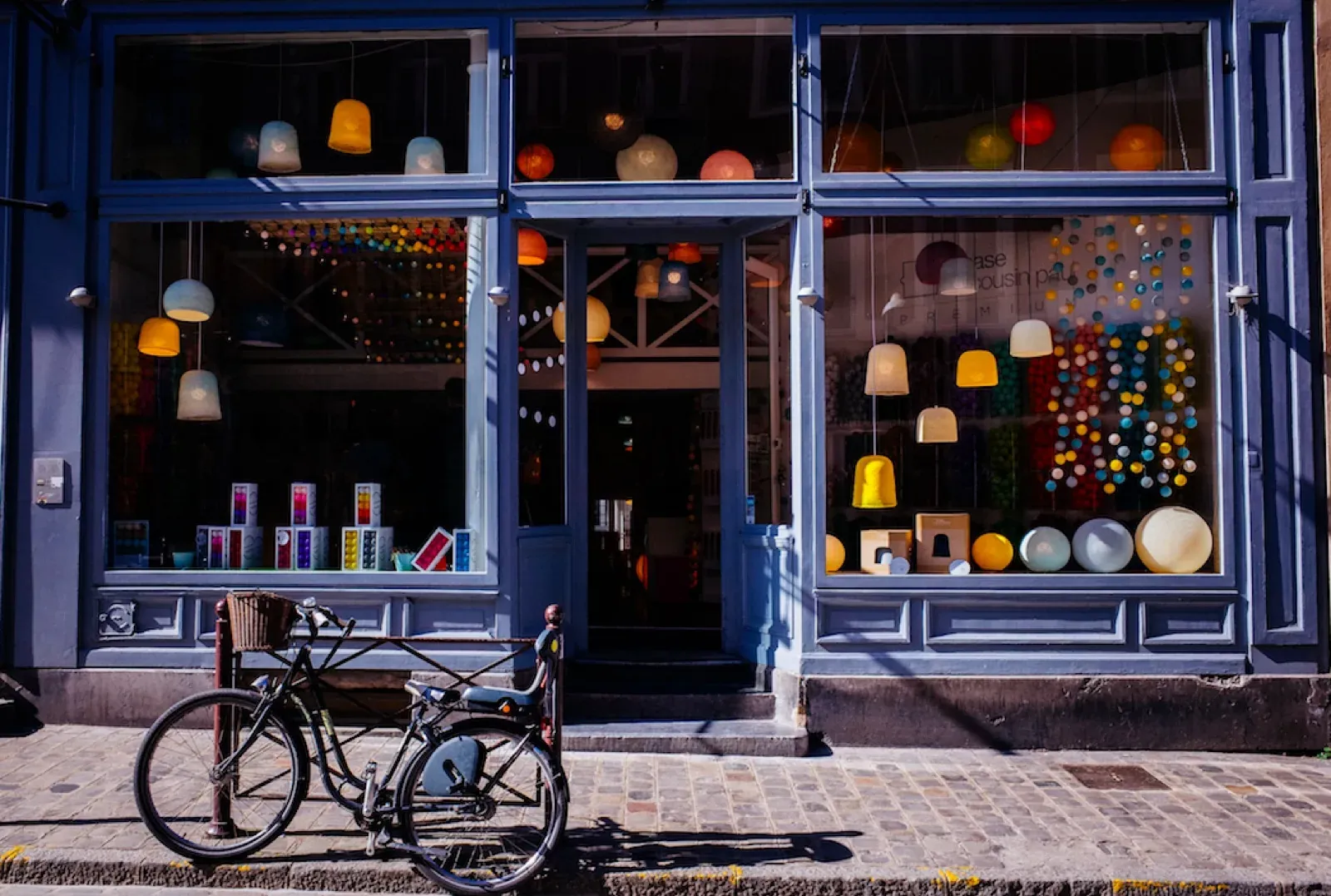
The exterior of the point of sale has a direct impact on the shopper’s interest in coming in; it’s the first hook:
- The exterior should say: Come in! You’ll have a great time! We’re waiting for you! We want to serve you! You’ll find what you’re looking for!
The four elements on which the architecture of the store’s exterior is based are:
- Sign
- Façade
- Access – entrance
- Window display:
- Size, composition and layout
- Open or closed
- Exterior and interior
- Window display theme
- Products on display
- Accessories
- Lighting
- Updating

Other, more qualitative aspects:
- Location
- Attractive exterior and interior design – professionals – architecture and design – window display dimensions suited to the type of product – premises dimensions in line with display and storage needs –
- Conveying the brand image, not only inside the store but already from the outside
- Favorable in every sense for the access of the target potential customers
- Lighting
A good window display is the result of planning, not improvisation. The role of the window-display professional, today called a “Visual Merchandiser”, is crucial.
Does the interior layout of the point of sale matter?
Once you’ve got the customer to come inside the point of sale, you need to focus on managing the shelf space.
- Space, aisle design, seating areas, the route the store itself lays out for the customer …
- Atmosphere: the stimuli the customer perceives with all five senses are key to the buying action.
- Distribution of products and assortment.
- Another very important aspect, although it isn’t part of the shelf space itself, is the customer service provided by the in-store sales staff.
KEY FACTOR:
The architecture, structure, organization and design of the physical space where we place the products, always thinking about how to win over the shopper.
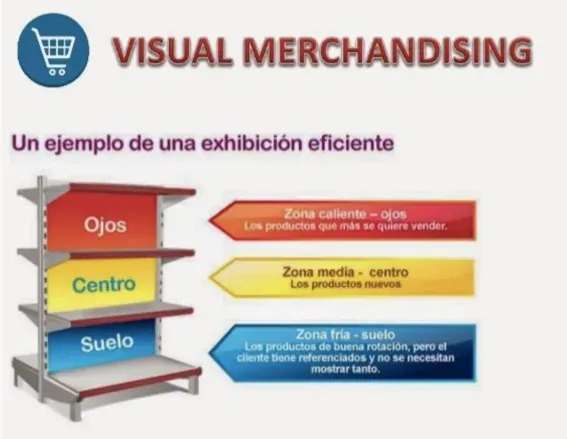
Act in a planned way on the use, valuation and design of the space and on the presentation of the products, prioritizing at any given moment the products with the greatest sales potential.
Take a look too at the 8 steps to create a physical store