

You have surely come across these three letters more than once: SKU. But do you know exactly what they mean? Let us explain.
An SKU, or Stock Keeping Unit, is a unique code used to identify and distinguish one product from the rest within an inventory. This code usually includes information such as the brand, model, color and size, among other relevant details.
Every company is free to create its own SKU system and decide what information to include in it. Some businesses use an automatic SKU generator to assign a random code to each product in their inventory. This type of generator can create codes based on different criteria, such as product type, supplier, or the date the item entered the inventory. For example, an automatic SKU generator might create a code like “PRD-1234” for a particular product.
Other companies prefer to follow a specific Stock Keeping Unit system built manually, which lets them customize and include whatever product information they want within the code itself.
What is it for?
The purpose of the SKU is to provide a simple and precise way to identify and track products in a company’s inventory. They are especially useful for businesses that sell a wide range of products, such as retail stores or online shops. By using a well-organized SKU system, businesses can keep a detailed record of their stock and simplify inventory management.
For example, in a clothing store, each garment can have a unique SKU that includes key information about the item. A cotton Levi’s shirt in medium size and dark blue could have an SKU like this: “LEV-SHI-COT-MED-BLUE”. The same shirt but in small size could have the following SKU: “LEV-SHI-COT-SM-BLUE”. And so on, for each of the different variants.
This way, store staff can easily look up the shirt in the inventory using its SKU and make sure it is in stock and available for sale. In addition, SKUs also allow the store to track inventory and sales for each specific garment model, which can help with decisions about purchasing and future marketing strategies to move certain products that may not be selling as well as hoped.
Benefits of using an SKU code for retailers:
- Product tracking: A good SKU system lets you identify each product following an internal logic, which makes it easier to locate and link to other catalog management data, such as stock levels, manufacturer or supplier information, shipments and orders, or sales forecasts.
- Sales forecasting: By analyzing the state of your catalog through unique SKU codes, it is easier to identify demand and sales volumes for each product and how they progress over time, which allows you to make informed decisions about selling and promotion. In addition, analyzing the costs and revenue tied to each SKU makes it quick to spot which products deliver the best returns and which perform worse.
- Improves customer satisfaction: Using an SKU code allows customer service teams and in-store salespeople to locate the products a customer is looking for more quickly, repeat a previous order, recommend similar products, and compare product features. They can also offer substitute products, that is, alternatives, in case a desired product is out of stock. In physical stores, using an SKU code makes it possible to answer stock questions on the spot without having to visit the warehouse or search the shelves by hand, improving the customer’s shopping experience.
- Avoids overstock and stockout situations: With better inventory control, you can reduce the number of unsold or surplus items, which helps save on storage costs and on the cost of the products themselves. Likewise, having greater control over your inventory helps you avoid excess stock in the warehouse or stockouts.
Tips for creating an SKU code
To start generating SKU codes, it is important to set up a basic structure in advance to save yourself headaches down the road. It is also important to consider what your needs and those of your buyers are, to make your work easier and build a Stock Keeping Unit model that is genuinely useful for your business.
For example, a furniture company will prioritize the dimensions of its furniture in its SKU code, while a store that sells footwear will most likely prefer to add the shoe size.
There is no single correct or valid structure because, as we have already mentioned, it varies depending on the priorities and needs of each company. You can follow these recommendations:
- Choose a specific and simple SKU, so it is easier to identify.
- The first two or three characters can refer to the product category: for example, a t-shirt, “TSH”, or footwear, “SHOE”. The next two characters could stand for the subcategory, the following ones could be the variant, and finally the sequence number.
- Be consistent: use a coherent and easy-to-remember format for all your SKU codes.
- Make it unique: make sure each product has its own SKU code to avoid confusion.
- Simplify the process: use inventory software that lets you create SKUs easily and integrates with your system. One example is our inventory management software Stockagile, which automatically generates SKU codes.
- Include relevant product information: add details such as brand, size, color, or product type to help your employees identify the product.
- Make it readable: make sure SKU codes are legible and easily scannable by your employees.
- Test the SKU system before putting it into operation to catch errors and make any necessary adjustments.
Avoid doing this when creating an SKU:
- Do not use repeated codes: make sure each SKU code is unique to avoid confusion in the inventory.
- Do not include unnecessary information: do not add irrelevant information to the SKU code to keep it from becoming too long and hard to handle.
- Do not overcomplicate it: do not create an SKU system that is too complex and makes inventory management and sales harder.
- Do not stand still: review and update your SKU codes as needed to adapt them to changes in your inventory or your business.
- Do not use the number 0 at the beginning, since some software programs do not handle it well.
Differences between SKU, UPC and EAN
There are several product identification codes, but they should not be confused with an SKU. The main difference between the Stock Keeping Unit and the others is that the former is an alphanumeric code while the rest are barcodes.
Below, we explain the main characteristics of each of them:
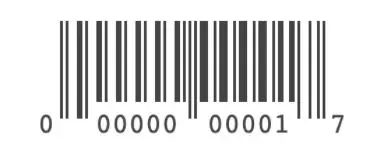
UPC
It is numeric (made up of numbers)
12 characters long
External use
Represents product and manufacturer information
It is universal
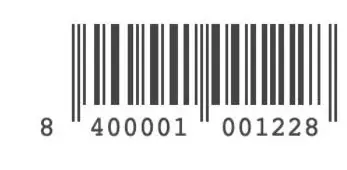
EAN
It is numeric (made up of numbers)
13 characters long
External use
Represents country, company and product information
It is universal
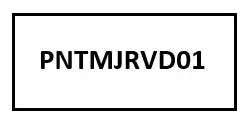
SKU
It is alphanumeric (made up of letters and numbers)
Between 8 and 12 characters long
Internal use
Represents product information
It is created by the company or the seller
To learn more about the different barcodes, you can visit the GS1 website.