

Are you drowning in spreadsheets, struggling to keep your product data up to date across multiple channels, or pulling your hair out trying to sync your inventory between online channels, warehouses and physical points of sale? Well, you’re not alone, and the good news is that there’s a solution designed to put an end to all these headaches.
Enter the world of product information management (PIM) systems, a game-changer in the world of e-commerce and multichannel retail. 🌐
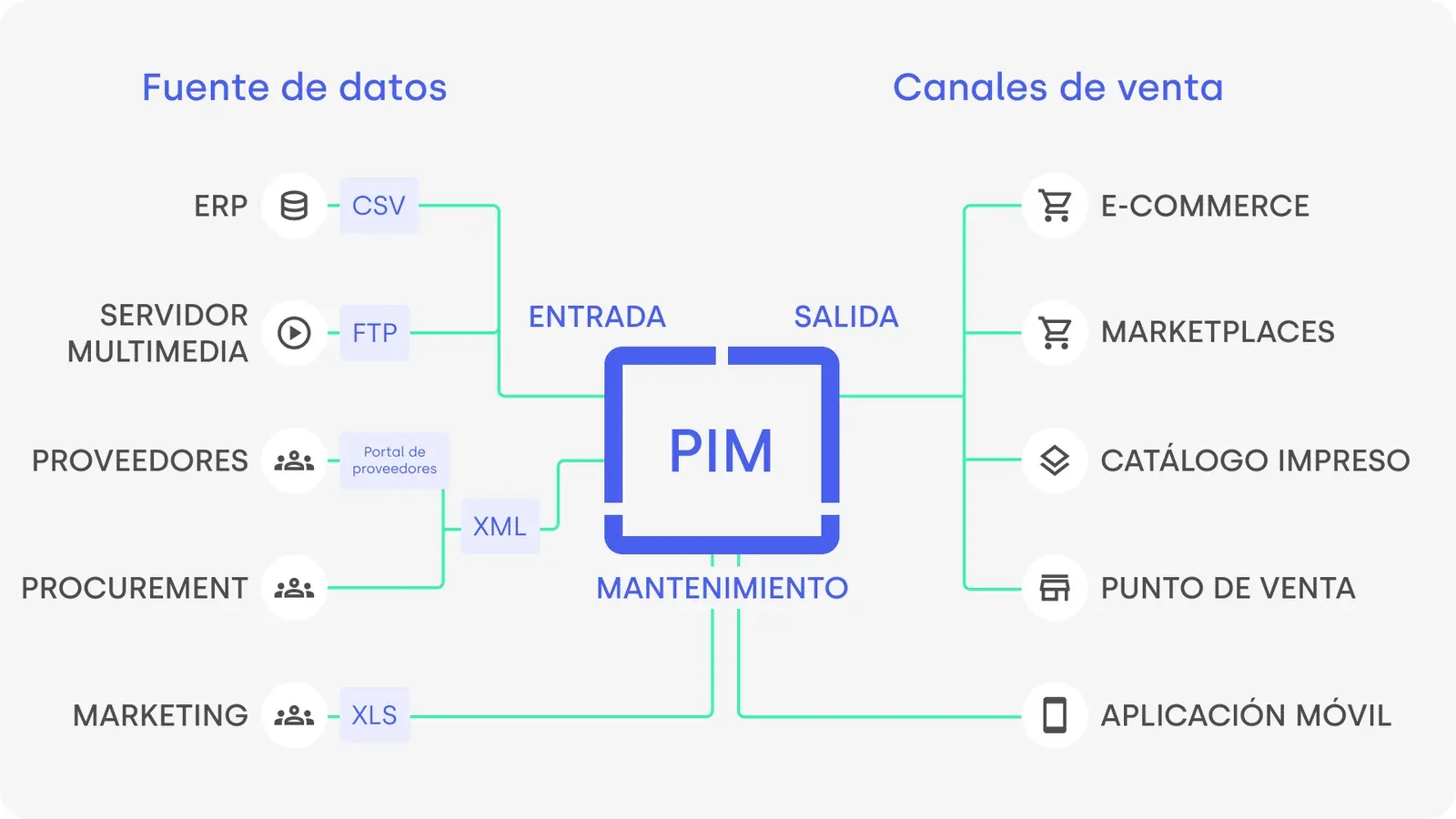
This complete guide will show you everything you need to know about PIM systems, from streamlining your product data to boosting your sales like never before. 🚀
Are you ready to master the art of product information management and make “spreadsheet nightmares” a thing of the past? Read on to discover the transformative power of PIM systems for your business.
Why you need to adopt a PIM system now
In today’s digital age, businesses must maintain vast amounts of product information to stay ahead of the curve. This is where a PIM, or product information management system, can be a game-changer. If you’re wrestling with product data inconsistencies, inefficient workflows, or you want to expand your e-commerce reach, read on.
What exactly is a PIM system?
A PIM system is the place from which you can collect, manage and distribute product data in a centralized way. It streamlines catalog management and ensures that your product data is formatted consistently and easily accessible.
- Data centralization: All product data is stored in a single place.
- Data enrichment: Add descriptions, images and much more.
- Data distribution: Share data easily across multiple platforms.
Key insight: A PIM isn’t just a storage solution; it’s an operational engine.
Check out the Wikipedia definition here.
How does a PIM system transform your business? 📈

Eliminate data silos
Before PIM, your product data was likely scattered across several systems. A PIM system centralizes this data, eliminating the need to track it manually.
Improve the customer experience
With more accurate and complete product data, your customers can make more informed decisions. This translates into greater customer satisfaction and loyalty.
Speed up time to market
Speed is key in e-commerce. A PIM system lets you quickly update product information and sync it across multiple channels, accelerating your time to market.
Comparing the leading PIM software solutions: A quick guide
Most of the PIM solutions in this table are standalone solutions, whereas Stockagile’s product information system is part of a more complete retail operating system with its own point of sale, warehouse management system, order management system and retail analytics modules.
| Features | Plytix | Stockagile | Sellercloud | Salsify | Akeneo | Pimcore |
| User interface | ★★★★ | ★★★★★ | ★★★★ | ★★★★ | ★★★★ | ★★★ |
| Customization | ★★★ | ★★★★★ | ★★★★★ | ★★★★ | ★★★★★ | ★★★★★ |
| Price | €€ | €€ | €€€ | €€€€ | €€€ | €€€ |
| Scalability | High | High | Medium | Medium | Medium | High |
| Multichannel support | Yes | Yes | Yes | Yes | Yes | Yes |
| API integration | Good | Excellent | Excellent | Good | Excellent | Excellent |
| POS integration | No | Yes | Yes | No | Yes | Yes |
| WMS integration | No | Yes | Yes | Yes | Yes | Yes |
| E-commerce integration | Yes | Yes | Yes | Yes | Yes | Yes |
Real-world examples of PIM in action 🌐
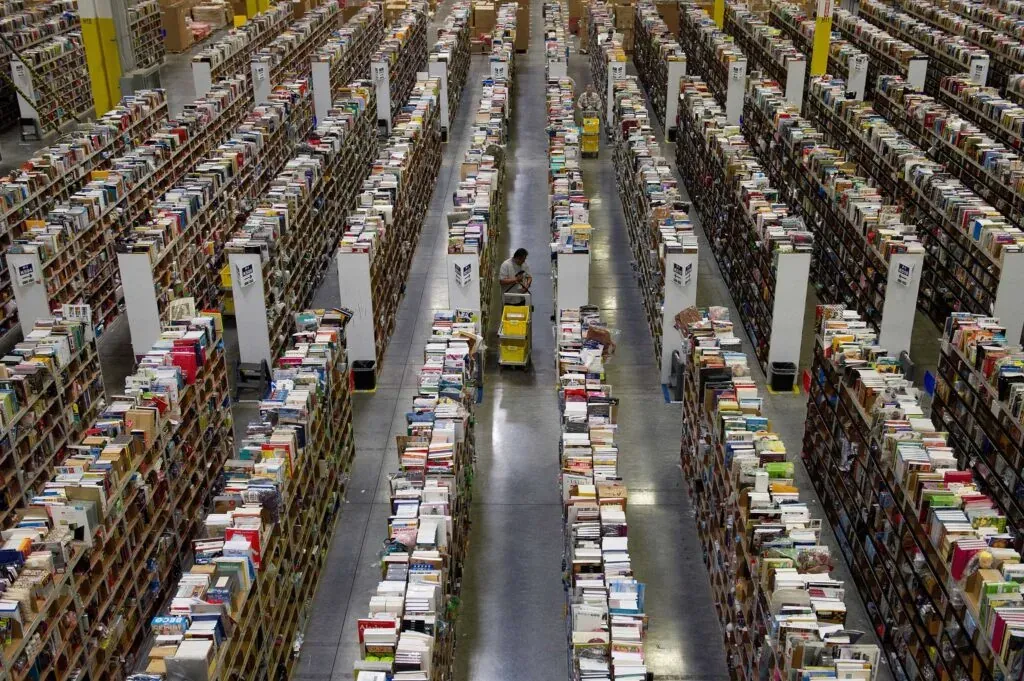
- E-commerce giants: Amazon and eBay use advanced PIM systems to manage millions of products. Tools like Stockagile let you integrate with your favorite marketplaces to sync product information and stock levels, so you never run into stockouts.
- Retail chains: Stores like Walmart use PIM for seamless catalog management and inventory tracking. Centralizing your catalog is vital when you have multiple points of sale (physical and digital).
- Manufacturers: They use PIM to streamline data and simplify collaboration with retailers. Sharing information with your B2B customers is key to boosting your performance as a manufacturer or wholesaler.
The future of PIM systems: AI and automation 🤖

As machine learning and AI continue to evolve, PIM systems are expected to incorporate these technologies for even better product data management.
A great example is using AI to create compelling product descriptions for your different channels. It lets you create bulk copy for your entire catalog in a matter of seconds.
Are you ready for the PIM revolution? 🎯
Adopting a PIM system could be the key to unlocking new markets and achieving scalable growth. By centralizing your product data management system, you improve efficiency, customer satisfaction and, ultimately, your bottom line.
Frequently asked questions – PIM FAQ 🤔
How does a PIM system differ from a CMS?
A content management system (CMS) is designed to manage the content of your website, whereas a PIM system is designed to manage all of your product data. A PIM can integrate with a CMS to ensure product data consistency across the different channels.
Why is a PIM important for e-commerce businesses?
For e-commerce, PIM ensures that customers receive the most up-to-date and accurate product information. This is crucial for decision-making and can significantly improve the customer experience, which translates into increased sales.
How does a PIM system improve SEO?
By centralizing product information, a PIM system ensures that all descriptions, titles and other content are consistent and optimized for search engines. This can improve your rankings and drive more organic traffic to your online store.
What kind of businesses benefit most from a PIM system?
While almost any business that handles product data can benefit, e-commerce businesses, retail chains and manufacturers usually find the greatest value in a PIM system due to the complexity of managing large product ranges across multiple channels.
Can a PIM system integrate with other platforms?
Yes, most PIM systems are designed to integrate with e-commerce platforms, ERP systems and other marketing technologies to provide a seamless flow of product information.
Is it expensive to implement a PIM system?
The cost can vary depending on the features you need and the number of SKUs you have. However, many businesses find that the efficiency gained from using a PIM system quickly pays back the initial investment.
How does PIM affect supply chain management?
A PIM system can greatly improve supply chain efficiency by centralizing all product information, making it easier to share data across the entire supply chain. This reduces errors and speeds up time to market.