
Control your raw materials
like finished goods.
Fabric, leather, buttons, hardware: every material is a catalog product, with stock, variants and a barcode. You know what you have, what each production order needs and when to buy — no separate spreadsheet and no stalling halfway through a run.
20-min personalized demo · No commitment · Data migration included

Retail brands already running on Stockagile












Your raw materials deserve the same control as your sales stock.
What changes the day materials stop living in a separate sheet no one reconciles.
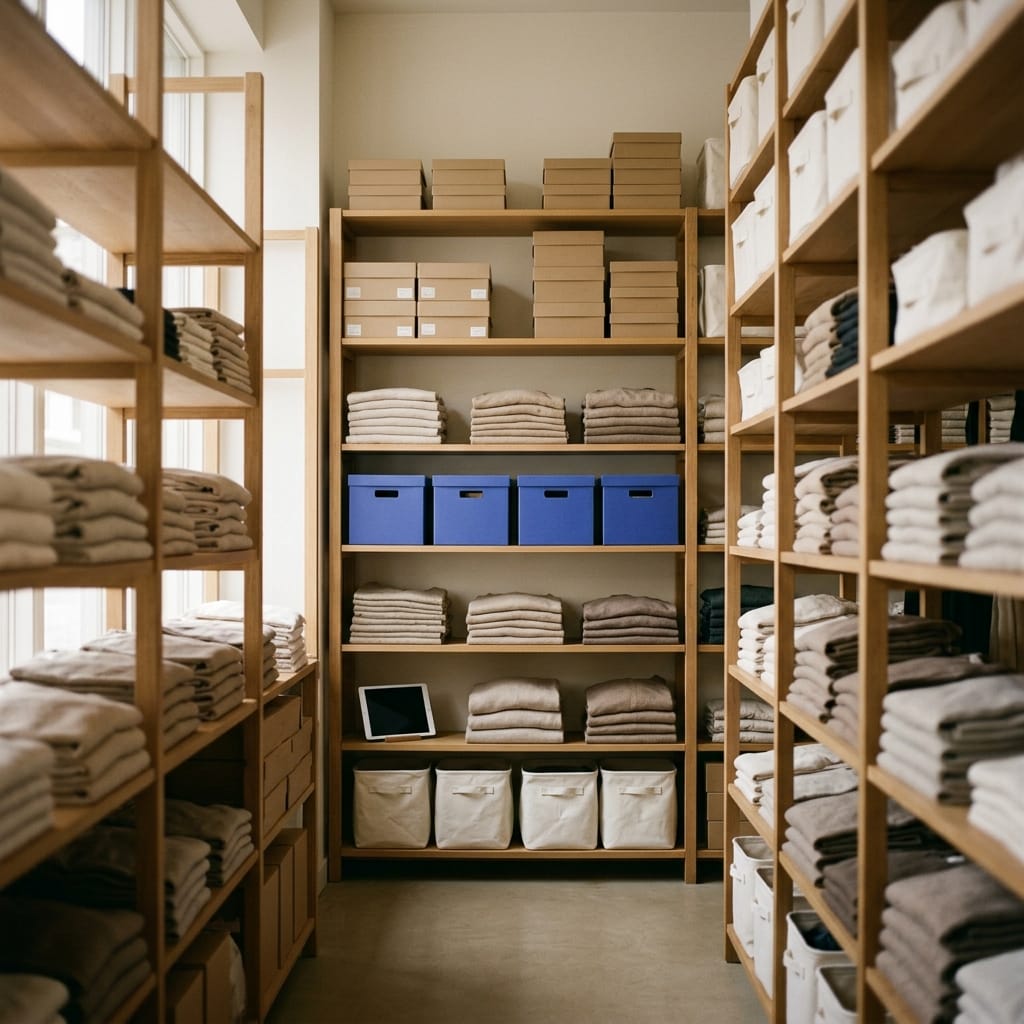
Every material, a catalog product
Fabric roll, leather, buttons: with variants (color, size), their own barcode and stock by location. You manage them like any other item — no parallel spreadsheet.

You know what each order needs
Before you launch production, the system calculates the material the order consumes from the BOM and compares it to your stock. If something's short, you see it before you start.
Buy on time, not half-way
When a material drops below its minimum, you generate the supplier purchase with the same flow as everything else. You start production with everything on hand, not one roll short.
Stock goes down on its own as you produce
Confirm the order and each material is deducted per the BOM, shrinkage included. Your raw-material stock reconciles without anyone doing the math by hand.
0 h
reconciling raw materials by hand
Before you produce
you see what material the order is missing and buy it on time
Real cost
per unit, with materials, shrinkage and freight included
Every material is a product. With stock, variants and a barcode.
You create fabric, leather, buttons or hardware like any other item: with color and size variants, a generated barcode to label and scan, and its own stock by location. And like any product, you count it: the physical count is compared against what the system says and, if there's a difference, you adjust it with a reason and it's all traced. Your material stock reflects what's really on the shelf.
Before you produce, you see what material you need and whether you have it.
The materials tab calculates what the full order consumes from the BOM —shrinkage included— and compares it to your available stock. If it's all there, you launch. If something's short, you see it here, not mid-run: and you generate the supplier purchase without leaving the flow.

Buy the material you're missing. With the same flow as everything else.
You order raw materials from the supplier like any other item: a purchase order in its own currency, receiving by delivery note —which can arrive in partial deliveries— and stock that goes up on its own when you confirm. The weighted average cost is recalculated and lands in the BOM, so your finished-product cost always starts from the real purchase price.
You produce, stock goes down on its own and you know what it cost you.
When you confirm the order, each material is deducted per the BOM —expected shrinkage included— and the finished product goes into stock. The cost of the materials consumed, plus shrinkage, sits inside the real cost of the product: nothing gets lost in a mismatch and your margins start from real data.
Customer stories from teams that control their raw materials like finished goods.

Fashion · Manufacturing
«I love that when an order comes in with products that are complex to make, I can know exactly how many pieces of each SKU we need. You save hours with a single click.»
Elena Estaún · Founder & Creative Director
+1,200
stores running
If you have stock and physical stores, it's the best program, whether for one store …
Martin Morillo Victorero · on Google · translated
−70%
in operational errors
All your materials procurement. Connected to stock.
From creating the material to consuming it in production, every step in one place.
Create and manage the material
Raw materials
Materials as catalog products: stock, barcodes and variants.
Bills of materials (BOM)
Define which materials and quantities each manufactured variant takes.
Stock by location
The stock of each material by warehouse, visible in real time.
Procure and consume
Raw-material purchasing
Order from the supplier with the same purchasing flow as everything else.
Material consumption
Stock goes down on its own when you confirm production, per the BOM.
Production orders
Launch runs and see the material requirements before you start.
Shrinkage and cost
Shrinkage and loss
Record expected shrinkage in the BOM and measure the real one.
Production costs
The real material cost, with shrinkage, inside the finished product.
Works even better alongside the rest of your operations
Raw materials lean on the rest of the system. Connect them and everything reconciles on its own, from the fabric roll to the sale.
Inventory
One stock across every channel, in real time.
Purchasing
Buy on data: what, how much and from whom, at real cost.
Planning
Replenish from the warehouse and buy before you run out.
Warehouse
Guided picking, packing and locations under control.
Orders
Every channel in one flow, with routing and returns.
Stores
Every sale updates stock, customer and till instantly.
Ecommerce
Shopify, WooCommerce and marketplaces in sync.
Wholesale
B2B portal, wholesale pricing and orders, with invoicing.
Frequently asked questions
Can I manage my raw materials with stock, variants and barcodes?
Yes. Every material —fabric, leather, buttons, hardware— is created as a catalog product. You can define variants at once (color and size, for example), generate a barcode for each combination and keep its own stock by location. It's managed like any other item, with no separate spreadsheets.
How do I know if I have enough material before launching a run?
In the order's materials tab, the system calculates the material the full run needs from the BOM —shrinkage included— and compares it to your available stock. If any material is short, you see it at that step, before you confirm the order, not mid-run.
What happens to raw-material stock when I confirm production?
When you confirm the order, the system automatically deducts the quantities of each material defined in the BOM, with expected shrinkage included, and adds the finished-product stock at the destination location. All in one step, with no manual adjustments and fully traced: who, when and what was consumed.
How do I restock raw materials when they run out?
With the same purchasing flow you use for any other product: you create the supplier purchase order, add the materials with their price and quantity, and when the delivery note arrives stock goes up on its own. If you're short on material for a specific production order, you can generate that purchase directly from the production flow, without switching systems.
Does raw-material cost roll into the finished-product cost?
Yes. When you receive each purchase, the material's weighted average cost is recalculated and lands in the BOM. When you produce, the cost of the materials consumed —plus expected shrinkage— becomes part of the real cost of the finished product, so your margins start from the real purchase price and not a fixed estimate.
Do raw materials get mixed in with finished products in the catalog?
No. The catalog distinguishes standard products from raw materials by the type assigned on the item record, and you can filter and manage each group separately. The Materials section of the manufacturing module groups only raw materials for clarity. The manufacturing module is an add-on module: ask us if it applies to your case.
Do your raw materials live in a spreadsheet no one reconciles? Let's talk.
We'll show you what controlling your materials would look like with your real items and BOMs, in a personalized 20-minute demo.
No lock-in · no sales commissions · migration included