
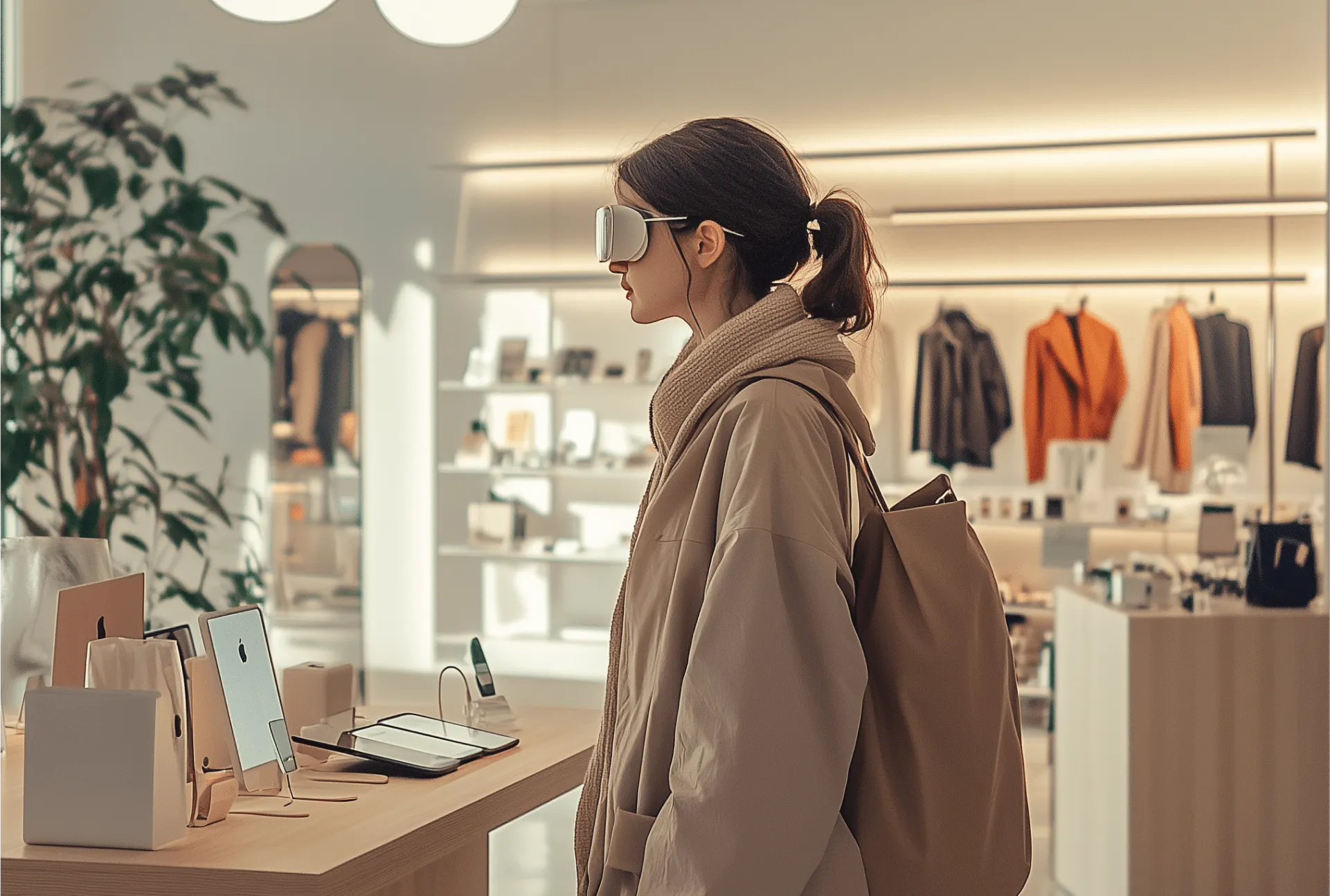
Artificial intelligence for retail is revolutionizing the industry, providing advanced tools that improve the customer experience, streamline operations and boost sales. In this article, we explore how AI is being used in retail, the benefits it delivers and examples of how it’s applied across the industry.
What is artificial intelligence in retail?
Artificial intelligence (AI) refers to the creation and use of algorithms and automated systems to analyze data, predict behavior and automate tasks. These technologies range from chatbots and virtual assistants to advanced data analysis and personalization systems, allowing retailers to operate more efficiently and offer their customers a more personalized shopping experience.
Key Benefits of AI in Retail
Personalizing the customer experience
AI makes it possible to offer personalized recommendations based on customer behavior, which improves consumer satisfaction and loyalty. For example: Amazon uses machine learning algorithms to analyze users’ purchase and browsing history, suggesting products that align with their preferences. Tools like Dynamic Yield let retailers create personalized experiences in real time, adapting website content and offers to each customer’s behavior.
Operational efficiency
Automating repetitive tasks, such as inventory management or order processing, frees up staff to focus on higher-value activities.
Tools like Stockagile let you automate processes such as inventory management, order processing or invoicing, freeing up employees to focus on customer service and other strategic tasks.
Real-time data analysis
It gives retailers detailed analytics and accurate predictions, helping them make informed, strategic decisions.
Better customer service
AI-based chatbots and virtual assistants provide 24-hour support, efficiently resolving common queries and issues.
Price optimization and inventory management
AI algorithms adjust prices in real time and predict product demand, which optimizes inventory levels and reduces costs.
Applications of artificial intelligence in retail
Chatbots and virtual assistants
They interact with customers in real time, resolving queries and improving the shopping experience.
Predictive analytics
It helps forecast product demand and manage inventory more efficiently.
Personalized recommendations
It uses advanced algorithms to offer products that match customers’ interests and behaviors.
Task automation
It streamlines processes such as inventory replenishment and order processing, improving operational efficiency.
The future of artificial intelligence in retail
Forecasts indicate that investment in artificial intelligence for retail will keep growing. According to research by Gartner and the Capgemini Research Institute, 70% of retailers are expected to invest in IoT technologies and 85% of customer interactions are expected to be handled by robots by 2025. This advance will not only transform the customer experience, but also drive growth and competitiveness across the industry.
Artificial intelligence for retail is not only changing the way stores operate, but also creating new opportunities to improve the customer experience and increase sales. With its ability to analyze large volumes of data and automate processes, AI is becoming an essential tool for retailers looking to stay ahead in an increasingly competitive market.
Frequently asked questions
What is artificial intelligence (AI) and how is it applied to retail?
Artificial intelligence (AI) refers to the ability of machines to perform tasks that normally require human intelligence, such as learning, decision-making and pattern recognition. In retail, AI is applied in the following ways:
Personalizing the customer experience: AI analyzes customer behavior data to offer personalized product recommendations and promotions.
Inventory management: AI algorithms predict product demand, optimize inventory levels and reduce excess stock.
Customer service automation: Chatbots and virtual assistants use AI to provide 24/7 customer support, answering frequently asked questions and resolving common issues.
Data analysis: AI processes large volumes of data to identify trends, buying patterns and market opportunities.
What are the benefits of implementing artificial intelligence in retail?
Implementing artificial intelligence in retail offers multiple benefits, such as:
Improved operational efficiency: AI automates repetitive tasks and processes, allowing employees to focus on higher-value activities.
Increased sales: AI-based personalization and recommendations boost conversion and average order value.
Inventory optimization: AI helps forecast demand and manage inventory more accurately, reducing costs and improving product availability.
Better customer service: Chatbots and virtual assistants provide fast, effective support, improving customer satisfaction.
Predictive analytics: AI makes it possible to anticipate market trends and behaviors, helping retailers make informed, strategic decisions.
What are some examples of artificial intelligence applications in retail?
There are various applications of artificial intelligence in retail, including:
Personalized recommendations: E-commerce platforms use AI to analyze purchase history and customer behavior, offering products that might interest them.
Chatbots and virtual assistants: These AI tools interact with customers in real time, resolving queries and providing personalized assistance.
Price optimization: AI algorithms adjust product prices in real time, taking into account factors such as demand, competition and market trends.
Sentiment analysis: AI analyzes reviews and comments on social media to better understand customer perception of products and services.
Supply chain management: AI optimizes logistics and supply chain management, improving efficiency and reducing costs.