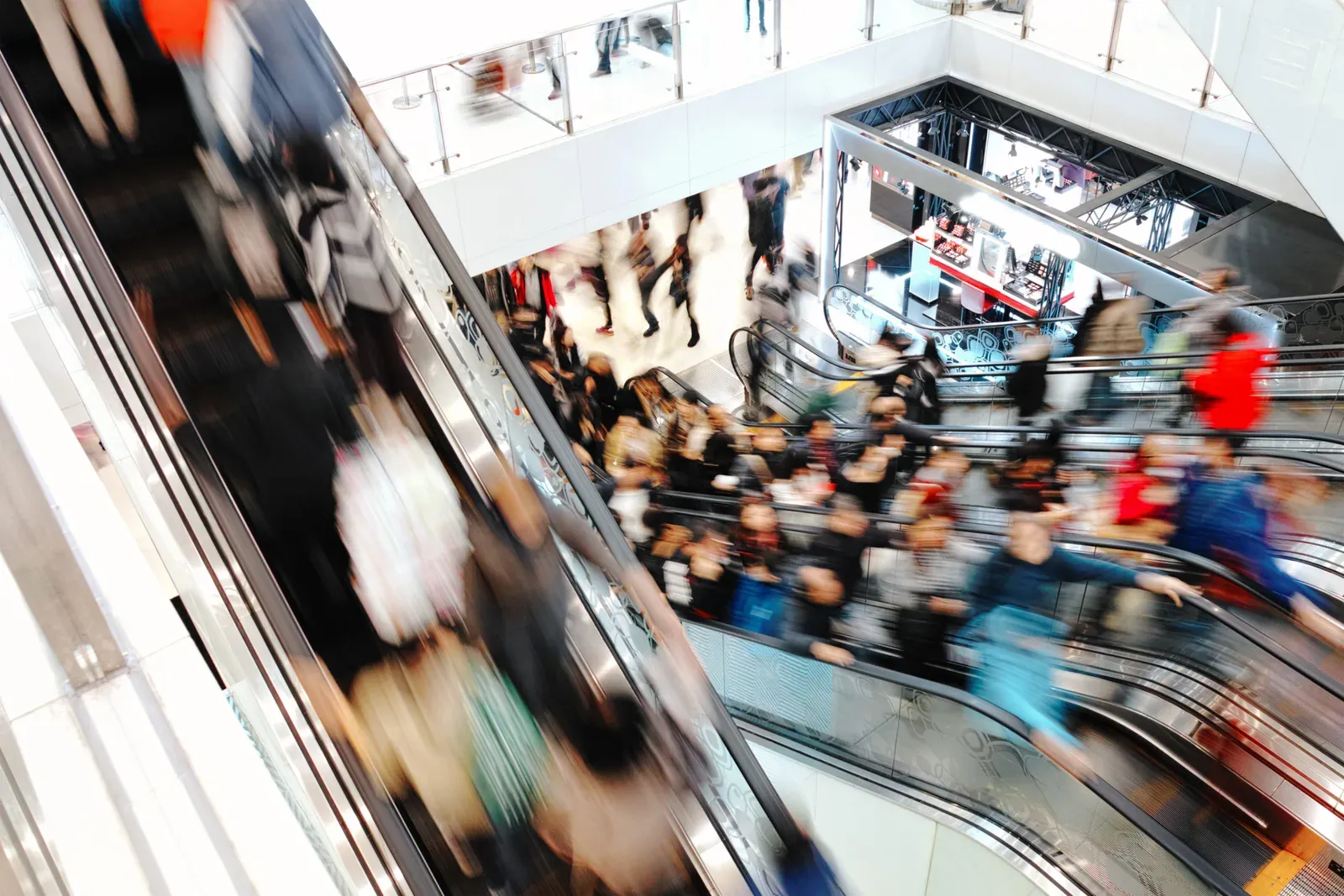
In-store flow refers to the route a customer follows from the moment they walk into the store until they leave it. The type of flow used will depend on the size of the store, the nature of the products on offer and the kind of retail space involved (supermarket, specialty store, outlet, etc.).
Flow areas are the paths customers move through calmly as they shop. Consumer flow can be shaped by:
- Walking speed
- Length of the journey
- Aisles
- Bottlenecks
1. Walking speed
If customers move too quickly past the shelves, they don’t have enough time to take in the items on display. Just like out on the street, inside a store people can walk at different speeds.
-
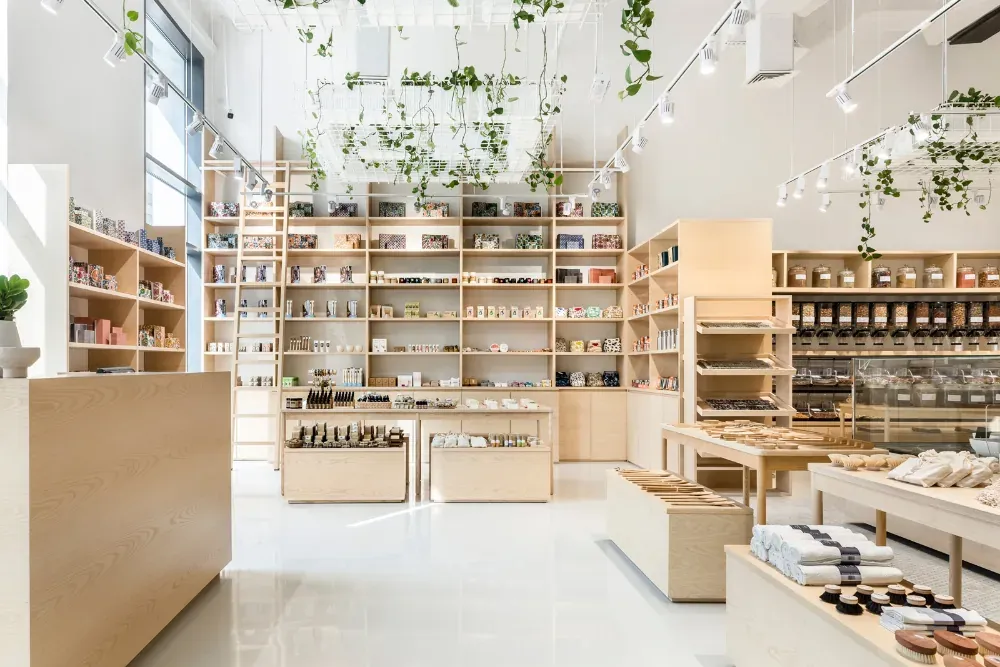
Wide aisles make it easy to move through quickly, while narrow ones slow customers down.
-
Clear signage for sections and stock encourages a smoother flow and makes shopping more pleasant.
-
Another very common technique for speeding up or slowing down customer flow along their journey is music. It can unconsciously influence the atmosphere and change how fast people move.
Loud music is often used to speed up the buying process when the store is busy; conversely, when there isn’t much traffic, the music tends to be softer. That slows the process down, which is what you want with products that call for thought and analysis before buying, such as furniture, appliances, and so on.
In many cases it isn’t in the store’s interest for the flow to be too fast, because sellers need customers to properly take in the products.
On the other hand, when the store is full, it’s better for customers to move quickly so that others can come in and, in that way, sell more.
In short, we can say that speed is something that can be controlled or anticipated through point-of-sale animation techniques. But even so, the most important thing is knowing when it’s in your interest for customers to move faster or slower.
2. Length of the journey
The length of the journey depends mainly on two factors:
- The size of the store.
- The speed at which the customer moves.
If someone walks into the store to buy an item they already know and know exactly where it is, the journey will be as short as possible. But if, on the other hand, the customer intends to browse for something and also has the time to do so, the journey will be as long as possible.
For example, a supermarket can know which items are bought on average (meat, fish, fruit, milk, bread, beer, etc.), which allows it to run a simulation of that shopping trip and work out the average duration.
There is a relationship between the size of the purchase and the time spent inside a store: when the customer spends little time in the store, they buy few items, which they had already planned in advance.
However, this doesn’t mean that keeping a customer in the store for a long time results in a large purchase volume, especially if it comes after putting up with queues, awkward flow, and so on.
By length of the shopping trip we mean the time the customer spends moving through the different sections and aisles until they head to the checkout with the products they’ve selected and leave the store.
4. Bottlenecks
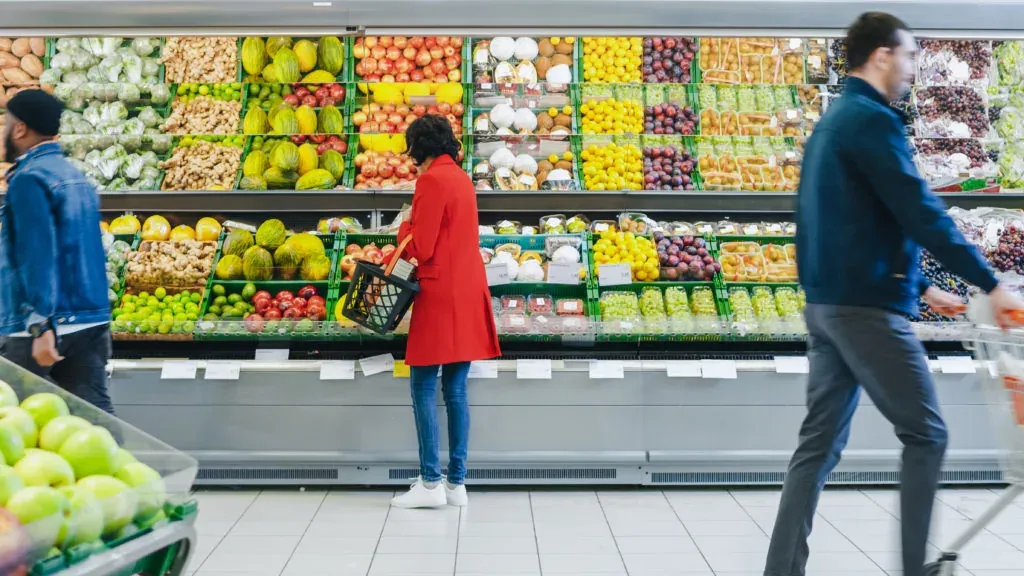
Bottlenecks are the points where crowds build up, hindering the walking speed and affecting the length of the journey: narrowing aisles, dead-end aisles, aisle crossings, etc.
- Bottlenecks can be natural, like waiting in checkout queues. To make that wait more pleasant, there are usually products placed along the queue.
They tend to create unpleasant situations and give the store a negative image. For that reason, it’s advisable to avoid bottlenecks as much as possible, since they only harm the business.
They are often caused by understaffing, service requirements or some other unintended reason.
- On the other hand, they are often created on purpose, artificial ones meant to reduce speed, such as narrowing the path with mass displays of items, demonstration stands or tasting stations.
In both cases, slowing down the pace draws more attention to the products closest to the consumer. But at the same time, if that wait or drop in walking speed is excessive, it can also have a negative effect on the store’s image.