

Have you ever wondered how companies decide the value of their product stock? Or how two businesses with the same amount of inventory can report different profits? The secret lies in how they calculate the cost of their stock. It may look like a simple task, but with fluctuating prices it turns into a complex puzzle.
Today we’ll dive into the world of inventory accounting, focusing specifically on the FIFO, LIFO and WAC methods. By the end of this article, you won’t just understand these concepts, you’ll also uncover a strategy that could significantly shape the financial health of your business. Let’s take this journey together and discover the keys to mastering inventory valuation and cost calculation.
The basics of inventory accounting
Inventory accounting is crucial for retail businesses, as it has a direct impact on financial statements and tax calculations. The method you choose for inventory valuation affects your cost of goods sold (COGS), your gross profit and your net income. Choosing the right inventory costing method, then, is more than just complying with the rules: it’s a strategic business decision.
What are FIFO and LIFO?
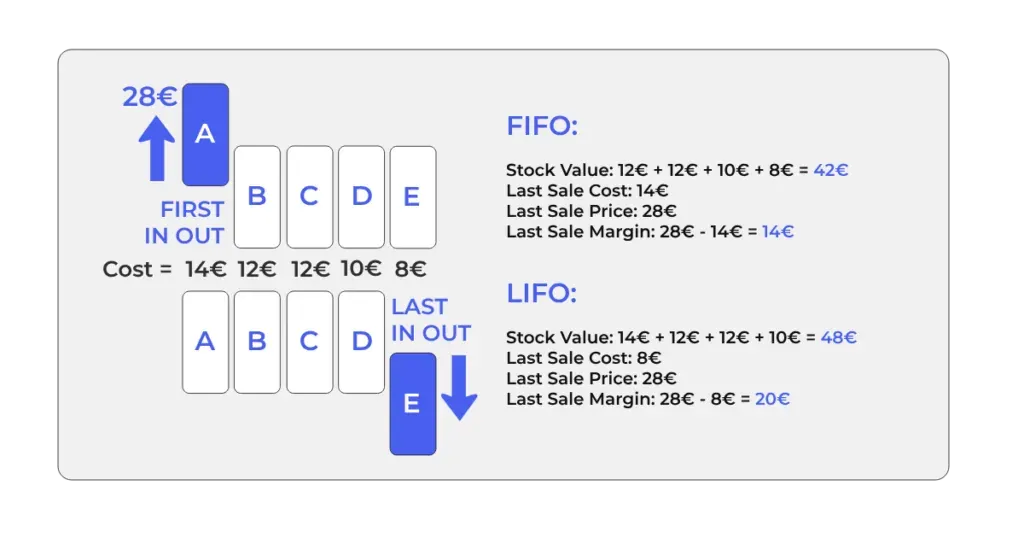
FIFO (First In, First Out) and LIFO (Last In, First Out) are two widely used inventory valuation methods. Each takes a different approach to inventory costing and can lead to very different financial results.
FIFO accounting
FIFO is a method in which the first items added to inventory are the first ones sold. This approach assumes that the oldest stock is sold first, which is practical for businesses that work with perishable goods or fast-moving products, such as technology or fashion.
Advantages of FIFO:
- Reflects the actual flow of goods for many businesses.
- Prevents stock from becoming obsolete.
- Tends to generate higher profits during inflation.
Disadvantages of FIFO:
- Higher reported profits mean higher taxes.
- Doesn’t always reflect current market prices.
LIFO accounting
By contrast, the LIFO system is based on the principle that the last items to enter inventory are the first ones sold. This method can be beneficial in times of rising prices, since it matches current costs against current revenue.
Advantages of the LIFO system:
- Can reduce tax liabilities during periods of inflation by reporting lower profits.
- COGS reflects current replacement costs.
Disadvantages of the LIFO system:
- Can lead to obsolete inventory if the oldest items are never sold.
- Not permitted under the International Financial Reporting Standards (IFRS), which limits its use for companies operating internationally.
Weighted Average Cost (WAC)
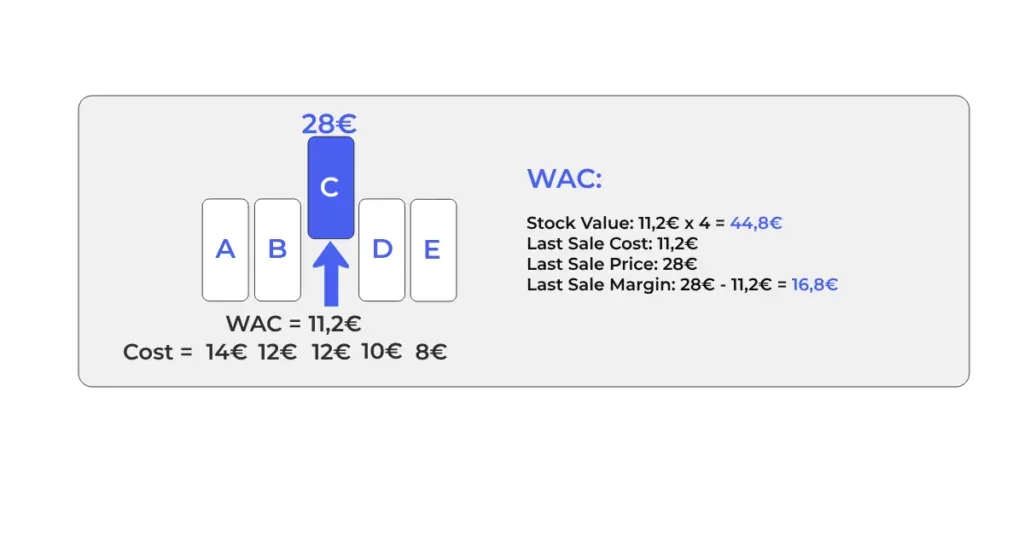
Beyond FIFO and LIFO, there’s another method worth mentioning: Weighted Average Cost (WAC). This method calculates the average cost of all items in inventory and is used to determine the cost of goods sold and the ending inventory value. WAC is beneficial for businesses where individual units are indistinguishable from one another, such as fuel or grain.
Choosing the right method
Choosing between FIFO, LIFO and WAC depends on several factors, including the type of products you sell, where your business is located and your financial goals. For example, if you’re in a country that adheres to IFRS, LIFO won’t be an option. Likewise, if cash flow management is your priority, it’s crucial to understand how each method affects your tax obligations.
Inventory valuation methods and your business
Applying the right inventory valuation method isn’t just a matter of regulatory compliance; it’s a strategic decision that affects your profitability and financial planning. For retail businesses, choosing between FIFO, LIFO and WAC can shape how you manage inventory, plan for taxes and assess your financial health.
Tools to calculate the value of your stock
One of the great advantages of the WAC method is its simplicity. It’s also agnostic to price volatility and gives you a fairly realistic picture of your margins. The only drawback is that, without a tool to help you, constantly recalculating the WAC of your products with every new purchase can be tedious.
Every time you make a purchase, you’ll need to recalculate the cost price of all your stock. You do this by adding the weighted price of the new products to that of the products already in your warehouse and dividing by the total number of units.
To do this you’ll need good inventory control and a system that performs this calculation automatically with each purchase, so that when you make a sale you know exactly what your margins are. Remember that your accountant needs to know the value of your inventory month by month to gauge the health of your business, so counting inventory every once in a while isn’t enough. You need constant control.
Stockagile can help you automate these processes, so don’t hesitate to request a free demo.
Impact on financial reporting
Inventory valuation directly affects the cost of goods sold, an essential component of your income statement. A higher COGS can lower your gross profit, which, under LIFO during inflationary periods, can be beneficial for tax purposes. However, it may not present the healthiest picture of your business to investors or lenders, who often prefer the more stable view offered by FIFO or WAC.

Strategic tax planning
The choice of inventory costing method can be a powerful tool in strategic tax planning. FIFO usually leads to higher taxes because of increased profits, while LIFO can lower your taxable base when prices rise. Understanding these implications can help you plan your financial strategy more effectively.
Real-world applications and limitations
While FIFO and LIFO provide frameworks for inventory accounting, real-world application requires a nuanced approach. Market conditions, the types of stock and your business goals all play a part in determining the most advantageous method. In addition, regulatory requirements and changes in accounting standards can further influence your choice.
Conclusion: The strategic advantage of mastering FIFO and LIFO
FIFO and LIFO accounting are more than just methods for calculating inventory cost; they’re strategic tools that can shape your company’s financial landscape. By understanding and applying these methods effectively, you can make informed decisions that optimize profitability, manage taxes efficiently and align your inventory practices with your business goals. Remember that the best choice depends on a range of factors, including your company’s specific circumstances and market conditions. As you navigate the complexities of inventory valuation, consider how each method aligns with your financial strategy to make sure you choose the most beneficial option for your business.
Diving into inventory accounting reveals a world of strategic possibilities. Whether you choose FIFO, LIFO or WAC, the key is to align your method with your business goals and the realities of the market. This journey may have started with curiosity, but it ends with a strategic advantage that can take your business to new heights.