

Are you thinking about opening a store but don’t know how to choose the ideal location? In this article we offer practical tips and recommendations to position your business strategically, maximizing your chances of success and growth.
1. Get to know your target audience
To choose a strategic location for your store, it’s important to know who your potential customers are. Understanding what they’re like and what they need will help you focus on their needs and figure out which areas you’re most likely to find them in. So, if you haven’t done it yet, take the time to study your target audience. You can do this through surveys, market research, or simply by observing your own customers. We recommend keeping several aspects about them in mind:
- Age:
One way to learn the age of your potential customers is through surveys. You can place surveys on your website, on your social media, or in the store itself. You can also observe them and get an idea of their age based on their appearance or behavior. In addition, if you already have registered customers, you can use that information to get an idea of the average age of your target audience.
- Gender:
If you sell products for women, most of your customers are likely to be women. Look at the type of products you offer to discover the predominant gender.
- Lifestyle:
Your potential customers’ lifestyle is also important, as it can influence their buying habits and how often they visit your store. For example, if your store sells products for children, you’ll want to set up in a neighborhood with lots of families with young kids. That way, you’ll increase your chances of making sales.

- What their buying habits are
To understand the type of transactions your customers make, you need a sales recording and tracking system in your store. This way, you’ll get an idea of the products they buy, how often they buy, and the average value of each purchase. Management software like Stockagile can help. With it, you’ll know every movement and transaction that takes place in your business.
2. Study the competition in the area
Want to make sure your store succeeds in its location? Study the competition in the area! Knowing what neighboring businesses are like and what they’re doing can give you a clear idea of how to stand out from the rest, or simply help you decide whether that location is the right one for you. To do this, you should look at these aspects:
- Research what kind of businesses are nearby
Are there many stores similar to yours? What kind of products and services do they offer? How many stores sell the same products you do? These are some of the questions you can ask yourself to better understand what kind of businesses will be sharing the area with you.
For example, if your store belongs to the fashion sector and clothing stores dominate that same location, you’ll need to consider whether choosing that spot would be a good decision for your business.
- Know your competitors’ prices
Knowing the competition’s prices will help you better understand the area’s purchasing power and assess whether your store fits that customer profile. It’s also useful for adjusting your store’s prices accordingly if you decide to locate there.
- Notice which sales strategies they use
How do they advertise their products or services? Where do they publish their ads? How present are they on social media? Gathering information about their marketing strategies can help you spot opportunities and inspire you to apply them to your own content plan.
It’s not about copying what your competitors do, but about learning from them to develop your own strategies and understand how customers in the area behave.
3. Create a SWOT analysis
It’s important to know your business’s strengths and weaknesses, as well as the challenges you face. That way, you’ll be able to design strategies to make your store viable and, should adversity arise, know how to handle it better and make sound decisions for the future.
Creating a SWOT (Strengths, Weaknesses, Opportunities, and Threats) analysis will help you gather all that information in a very visual way and assess where your company stands relative to the competition. This will further help you work on a key strategy to achieve good results in whatever location you’re in. You can do your SWOT analysis manually or by using a digital tool (link) that automatically generates the strategies for your specific case.
Here’s an example so you know how to do it:

4. Evaluate the location’s potential
There are several key factors you should consider when evaluating a location’s potential. These are the main ones to keep in mind:
- The visibility of the area
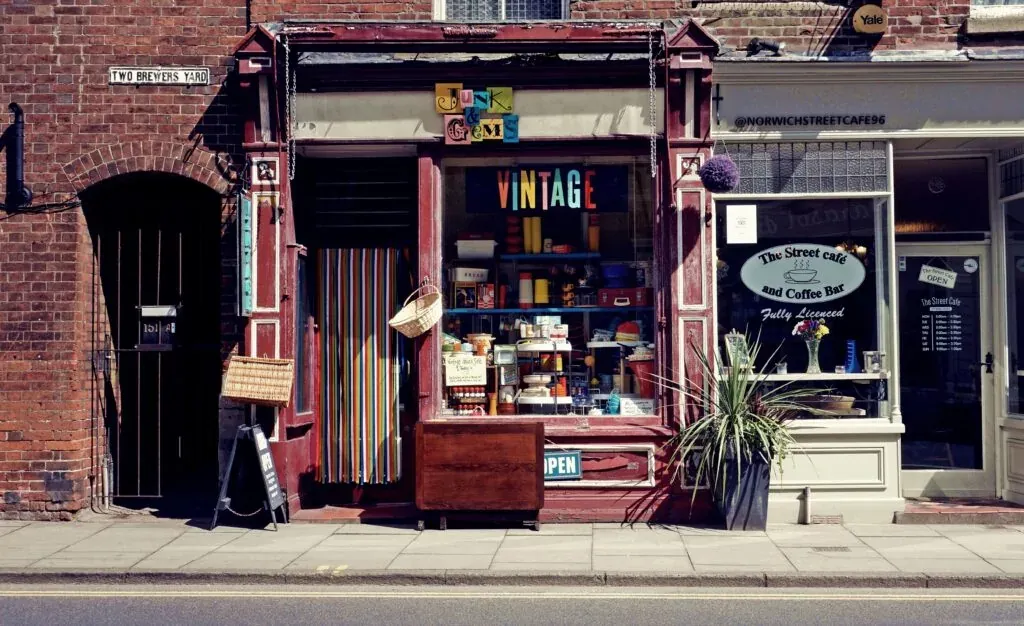
Visibility is what attracts customers to your store and invites them in to shop. If your store isn’t visible from the street, or is hard to recognize, you probably won’t attract as many customers as you’d like. We recommend paying attention to how open the space is, whether the premises face a busy street, or on the contrary sit in an alley with barely any foot or vehicle traffic. Also check whether there’s any building or structure blocking your point of sale.
Once you’ve decided which location is right for your store, you can put some strategies in place to improve that visibility. One example is using clear, eye-catching signage. You can place a sandwich board on the sidewalk with your store’s name and any offer or promotion you have at the moment. In addition, it’s important that the sign displaying your store’s name is large and attractive enough to catch the attention of pedestrians and allow drivers to see it from the road (if you have one nearby).

- Accessibility
When it comes to accessibility, your store’s location must be easily accessible for your shoppers. If your store is in a poorly signposted or hard-to-reach spot, your potential customers are likely to feel discouraged from visiting. However, if your store is in a well-signposted, accessible location, it will be much easier for them to reach and your sales will increase.
For example, imagine you have a clothing store in a shopping mall. If your store is located on a main corridor and near the main entrances, you’ll likely attract more customers than if it were tucked away in a corner of that same mall. The same goes for a store on a city’s main street. If your store is on a busy, well-known street, you’re more likely to attract customers than if it were on a side street or in a residential area.
In short, evaluating an area’s visibility and accessibility is crucial when choosing the ideal location for your physical store. Be sure to carefully consider these factors and choose a location that is easily visible and accessible to your potential customers.
5. Calculate rental cost and profitability
If you’re looking for the ideal location for your store, it’s essential to consider both your budget and the rental cost that choosing one location over another will entail. Your budget will let you set how much money you can invest in your business’s location, and it’s important to do this realistically to avoid financial problems down the road.
The rental price can vary depending on the location of the premises and its main features. For example, a location in a high-traffic area can be more expensive than one in a more rural or suburban area. In addition, the size of the space, the length of the lease, and market conditions can also affect the cost.

It’s important to find a balance between your budget and the rental price when choosing your store’s location. Make sure to choose a space that fits your needs but stays within your budget. Research your options carefully and choose the best location for your business. The right decision can have a significant impact on your business’s long-term success.
There are several websites that offer tools to calculate the price per square meter of a rental space. To do this, go to the “warehouse or premises rental” section, where you can filter by area, budget, and floor area. Once you’ve done that, you’ll see the different available premises and their price per square meter. This way, you can get an idea of the rental price based on the area and the features of the premises. You can check it here:
Now that you have all the tools you need to choose the ideal location for your store, it’s time to put your skills into practice and find the perfect place to grow your business!