

What is category management?
Category management is a term coined by Brian F. Harris. Over the last few years it has been gaining importance among retailers. It can take on different meanings, but the general idea is that it is a strategic process that groups products into specific areas.
By putting it into practice, we’ll see how we can better spot opportunities, improve our relationship with suppliers, maximize the long-term value of the business, and make purchasing decisions easier.
What has happened in the industry?
Over the years we’ve seen all of these factors grow:
- Retailers’ expectations and needs driven by customer demand.
- The market is more competitive because of the new technologies being rolled out.
- New sales channels appear and we have to keep up to date.
On the other hand, several things have declined:
- Customers increasingly want to spend less time shopping and are less loyal to brands.
- It’s harder and harder to differentiate the product and the sales channels from the competition in order to stand out and win more customers.
Benefits of category management
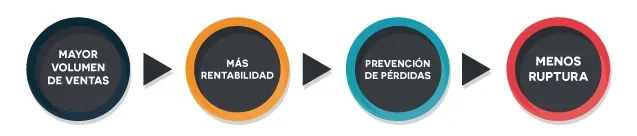
- Increases sales
- Increases the product’s net profit margin
- Reduces inventory
- Boosts customer loyalty and retention
- Lets you have a planned strategy and control every stage of production.
Requirements to make good use of category management
- Data: We need historical purchase-and-sales records of products with suppliers in order to work on our business.
- Organization: To roll out the whole process in our business, we need every department to work together, with clear, company-wide goals.
- Collaborative mindset: Working as a team, communicating, and having the freedom to voice concerns and new ideas to put into practice throughout this process.
- Technical tools: Evaluating the results in each category with analytics tools and automating processes will make our work much easier in every respect.
The 4 steps of category management
- Market assessment
The first step is to ask ourselves: What makes the consumer choose our business?
- Low prices, fresh products, exciting products, convenience products…
2. The retailer’s strategy
2.1. Defining the categories
Grouping products into categories is something many retailers do. To define the main categories, we should look at our history and set them up so that consumers buy the products in our store. That way we’ll know how to group the products and by which criteria.
2.2 Assigning roles to the categories
Here the retailer needs a broad view of the entire business and must assign different roles to the different categories based on how important they are to the business. The most important categories are the ones that align perfectly with our customers.
We’ll ask ourselves:
- Which products fall within each category?
- What role do we assign to each category?
- How will we allocate resources to each category?
3. The category management plan
Once we’ve divided our business in line with our consumer, it’s important to have data about our business.
3.1 Market analysis
We have to assign each category a strategy or goal we want to pursue, such as attracting more customers to the store or increasing sales of the products we have on the shelf.
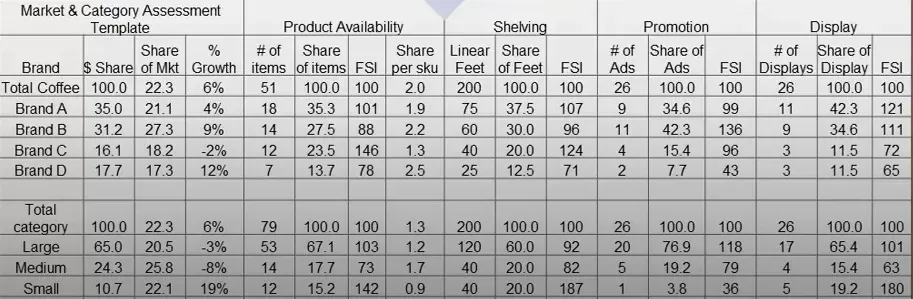
In this table we can see the different categories on the left (Brand A, Brand B…) and the goals set within the different strategies this example is following. In this case, its strategy focuses on 4 objectives: Product Availability, Shelving, Promotion and Display.
Once we have the plan, the Category Owner has to evaluate whether the guidelines set for the different products, the position of the products in the store, the price and the promotions are being followed.
4. Plan implementation and evaluation
Once the plan is up and running, in this phase the Category Management Owner has to evaluate how the retailer is doing versus the market, in order to find new opportunities.
The role of the category management manager
The person in charge of running this process may need to take part in annual negotiations with specific suppliers and close agreements on behalf of the retailer. They are also responsible for supporting both parties, growing the sales of each category, and overseeing them. Finally, they aim to recommend and help the retailer make better decisions.