
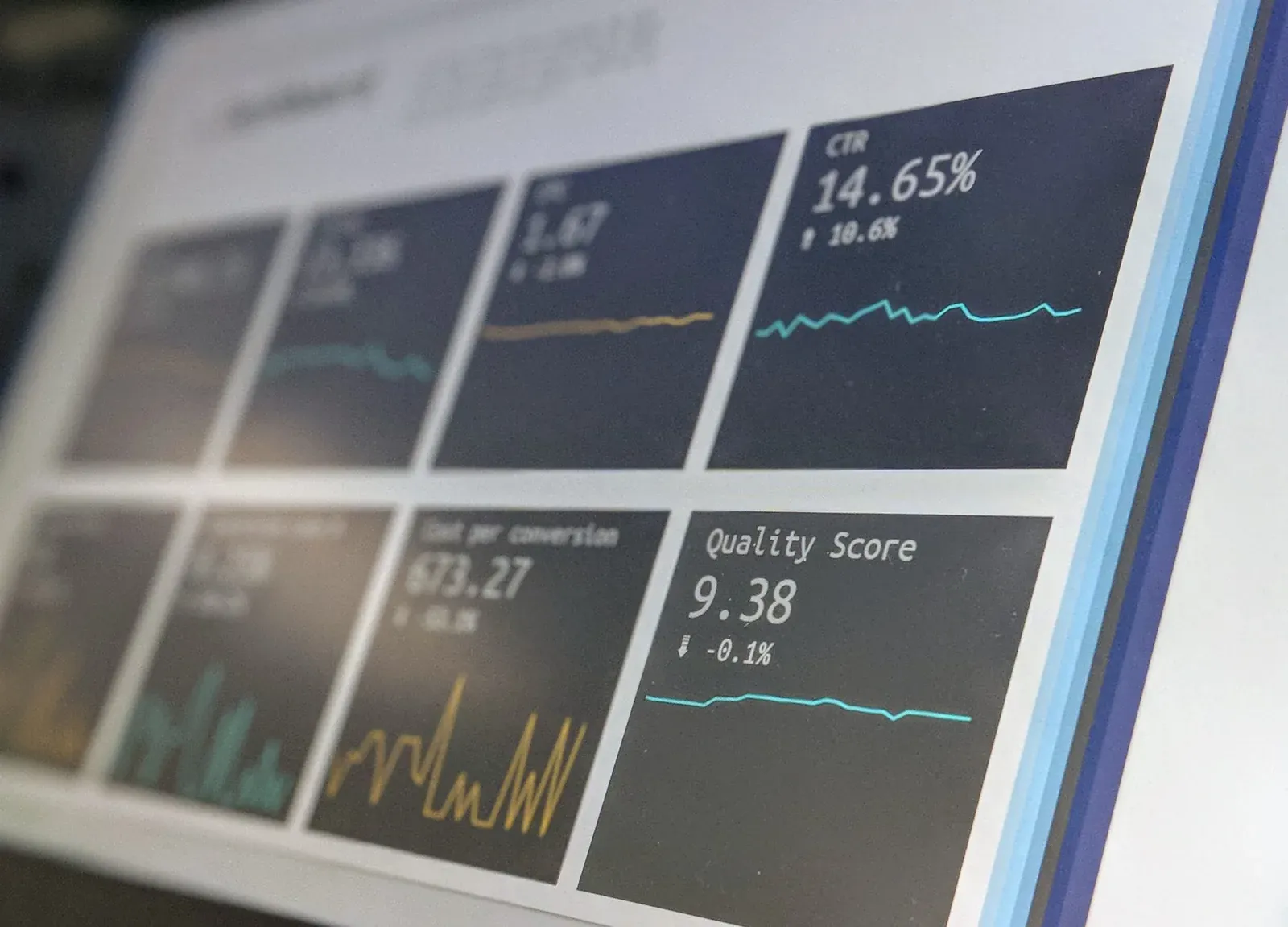
Need to measure how your business is performing? Here we’ll explain how to gauge the profitability of your company’s balance sheet and income statement using ROI.
ROI (Return On Investment) is an economic ratio generated from different actions that measures the return we’ve obtained on a budget we’ve invested.

Why is ROI important?
One of the most important things to keep in mind when running a strategy is checking its results and measuring its profitability. Each strategy has specific elements you need to consider when calculating ROI.
It’s the economic value generated as a result of implementing different marketing activities. In other words, it tells us how much profit we’ve earned for every euro invested.
Every company needs to calculate ROI, whether to find out the profitability of a specific action, the return on a campaign, the profitability of a business area, or the ROI of the entire business.
How is ROI calculated?
The ROI formula is:
ROI = ((Profit – Investment) / Investment) x 100
From the profit you’ve obtained (or plan to obtain) from an investment, you subtract the cost of the investment made. Then you divide that result by the cost of the investment, and the result of that operation is the ROI.
The final figure is usually expressed as a percentage, so it should be multiplied by one hundred.
If the return on investment comes out positive, it means the action is profitable; if it comes out negative, it means it’s not profitable and that we’d be losing money.
Example
Let’s calculate a specific action, such as a Google Ads campaign that costs us 1,000 euros a month for 6 months. We realize that at the end of those 6 months we’ve sold 4,000 products.
If your product costs €20 with a 50% profit margin, then you’ve earned €10 on each sale, or a total net profit from sales of €40,000.
To calculate the ROI, we subtract the marketing costs from the profit you obtained and divide it by those same investment costs.
40,000 – 6,000 / 6,000 = 5.6 x 100 = 566%
With this campaign, we’re getting a return of 566% on what we invested.
Based on the result, we get the information we need to make short-term decisions and evaluate any projects that aren’t profitable.
If you have an ERP system, it offers the possibility of making this calculation using the set of applications it’s made up of. In short, an ERP is about integrating all the operations a company carries out.
StockAgile offers a system with different modules such as analytics, contacts, inventory, stores, wholesale, manufacturing, and invoicing. Ideal for managing stock, multiple stores, and much more from a single platform.