
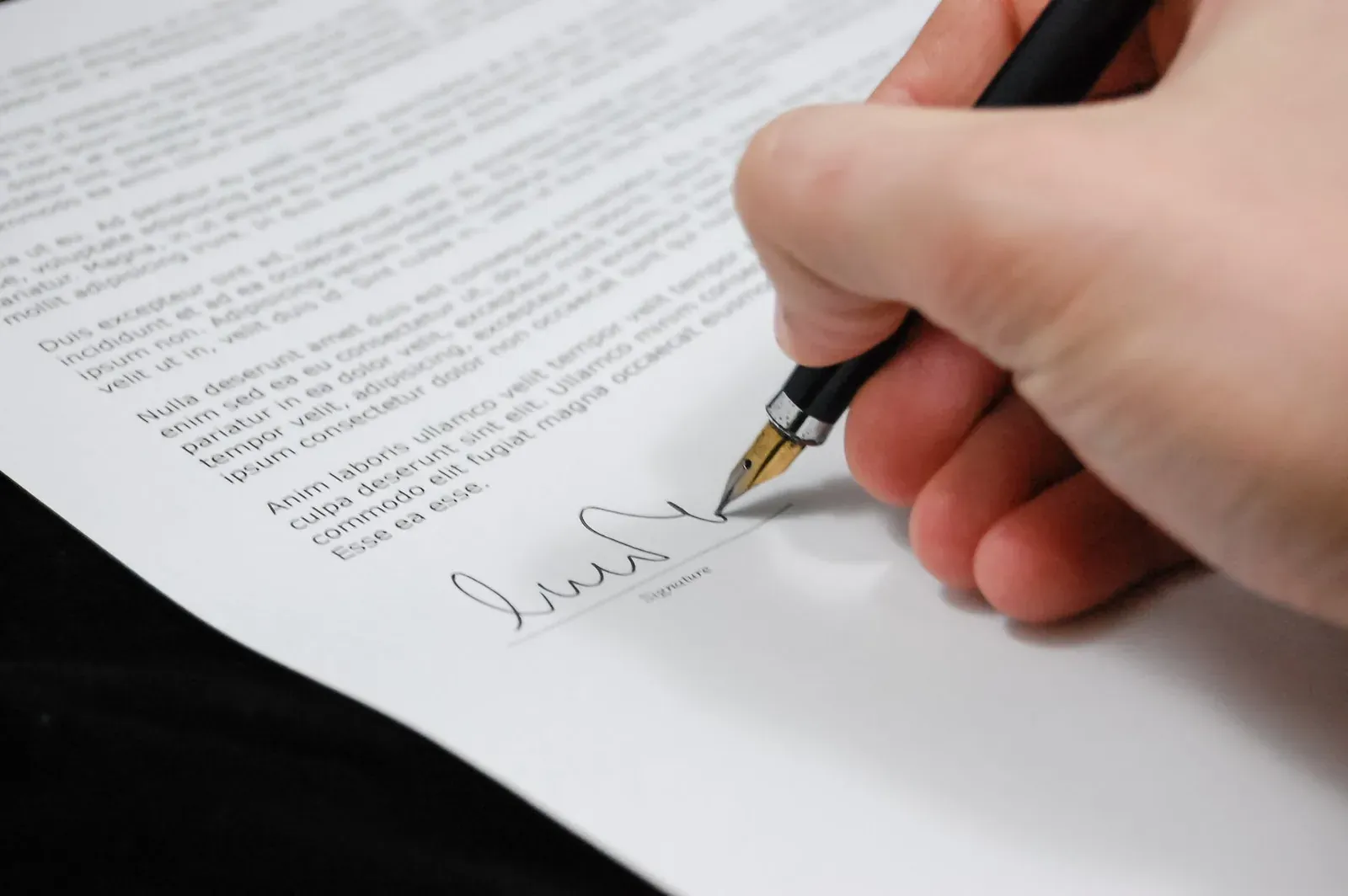
What is a delivery note?
A delivery note is a commercial document in which the customer and the supplier record the dispatch and receipt of the goods. It certifies the transaction, unlike an invoice, which certifies the payment.
Who is involved in managing a delivery note
- Seller: The person responsible for issuing the delivery note with the detailed information about the transaction, as agreed beforehand.
- Buyer: The person responsible for checking that the goods have arrived correctly; they must sign the delivery note and send a copy back to the seller confirming that the transaction has been completed.
What a delivery note is for
It is prepared by whoever ships the products, the supplier or seller. On one hand, it allows the seller to demand payment for the product, and on the other, it lets the buyer receive it under the agreed conditions.
Signing and delivery
As we mentioned earlier, the delivery note is issued and prepared by the seller. Once the transaction is complete, the buyer signs it and sends a copy back to the seller.
It is very important that the buyer checks that all the products meet the agreed conditions, because signing the delivery note means the seller is cleared of any problem with the delivery of the goods. In this case, if a shipping company has acted as an intermediary, their signature means the delivery was made correctly.
We sign the delivery note and then realise that…
- The goods are damaged and it’s the shipping company’s fault. By signing the delivery note, both the shipping company and the seller are cleared of blame. Legally, nothing can be claimed once it has been signed. Normally, the buyer absorbs the damage unless they manage to reach an agreement with the seller or the shipping company.
- The goods are damaged due to the seller. The buyer has 30 days to file a claim with the seller, backed by the delivery note.
What a delivery note contains
- Document number.
- Buyer’s details.
- Seller’s details.
- Date of issue.
- Date and place of delivery of the goods.
- A description of the products, indicating their quantity.
Examples of delivery notes with StockAgile
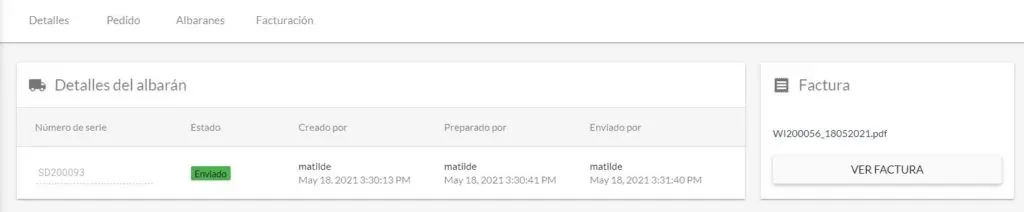
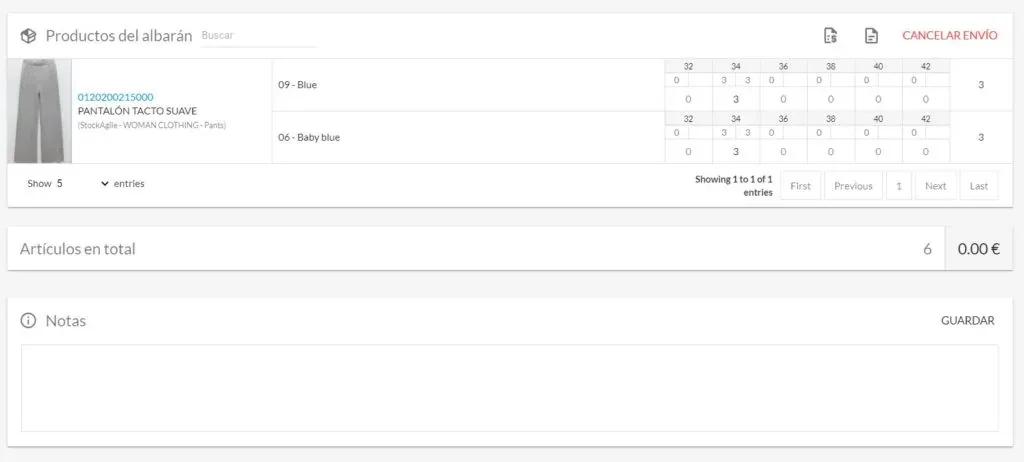
With StockAgile we can see the detailed information and the associated invoice. The products, the total number of items, and any notes we want to record against a sales order.
Types of delivery notes
Depending on the data the document includes, we find:
- Priced delivery notes: These contain additional information such as the price of each product, discounts, taxes, and the total amount of the order. They are not accompanied by an invoice; invoicing is done after the product is delivered.
- Non-priced delivery notes: These contain the minimum data needed to produce a delivery note, since they are complemented by the invoice, which specifies the remaining information.
The difference between an invoice and a delivery note
A delivery note and an invoice are different. The former has no legal or tax function and is optional in any transaction, whereas an invoice is mandatory and does have tax implications. Another difference is that the invoice contains information about the VAT (IVA) applied, the tax details of both parties, and the quantity of product.
The difference between a proforma invoice and a delivery note
A delivery note is a document signed by the customer once the delivery of the goods has been completed. A proforma, on the other hand, is a provisional invoice for that commercial activity.
See more information about what a proforma invoice is